Wednesday 13/6 – part one
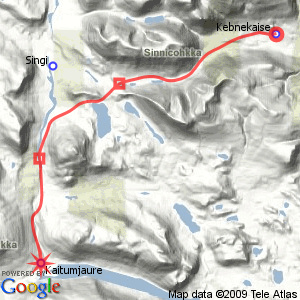
Kebnekaise – Kaitumjaure
| Horizontal distance: | 24 km |
| Vertical distance: | +220 m, -320 m |
| Time: | 7 h 30 min |
| Food breaks: | 30 min, 15 min |
| Dinner: | – |
| Night accommodation: | – |
| Stage classification: | Medium |
| Map points: | Kebnekaise, Kaitumjaure |
I slept very well and awoke to a world with high clouds and some patches of blue. I had breakfast in the service building and then packed up and cleaned while Anders and Tina left. I checked out and talked with Emma and a couple of the janitors outside, and then left myself around 08:45. By then the clouds had split apart more, but I wore the wind jacket against the chill in the air. Rather than wading through snow on the trail beneath Kaipak I walked below the station building and then over the side of Mastberget (with the antenna) and returned to the main path later.
There was a new, sturdy wooden bridge over Jökelbäcken, which was completely unnecessary at the moment due to the very limited melting. After the next bridge over Kittelbäcken I followed a lower route around a snowfield, and then came out onto the large heathland before the narrow part of the valley. The sun was out in full, but there was also a fair bit of wind, which made for a pleasant combo. I caught up with the others at the second of the Šiellajohka bridges, and we walked together for a short bit before I pushed on.
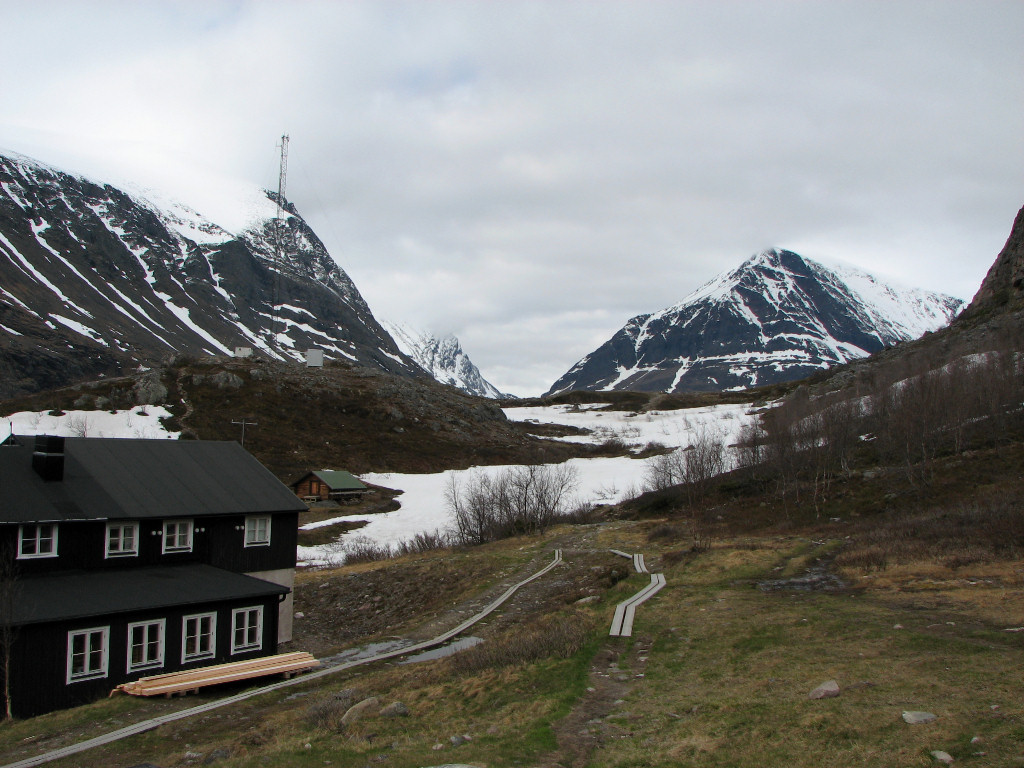
Cloudy morning
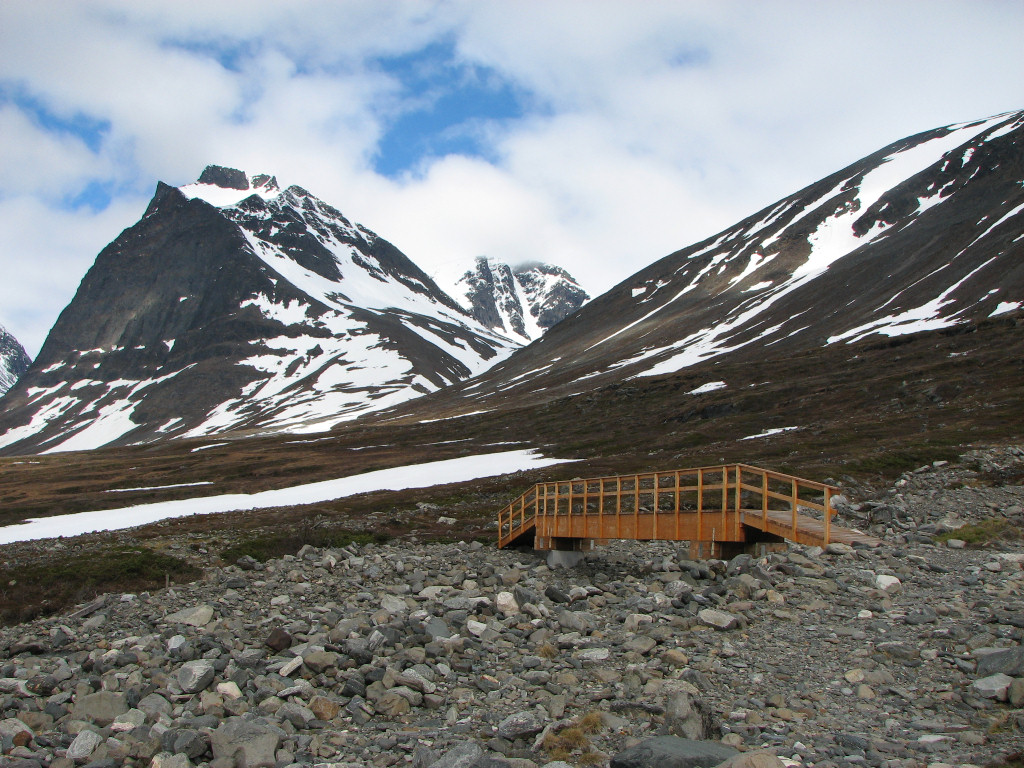
New bridge
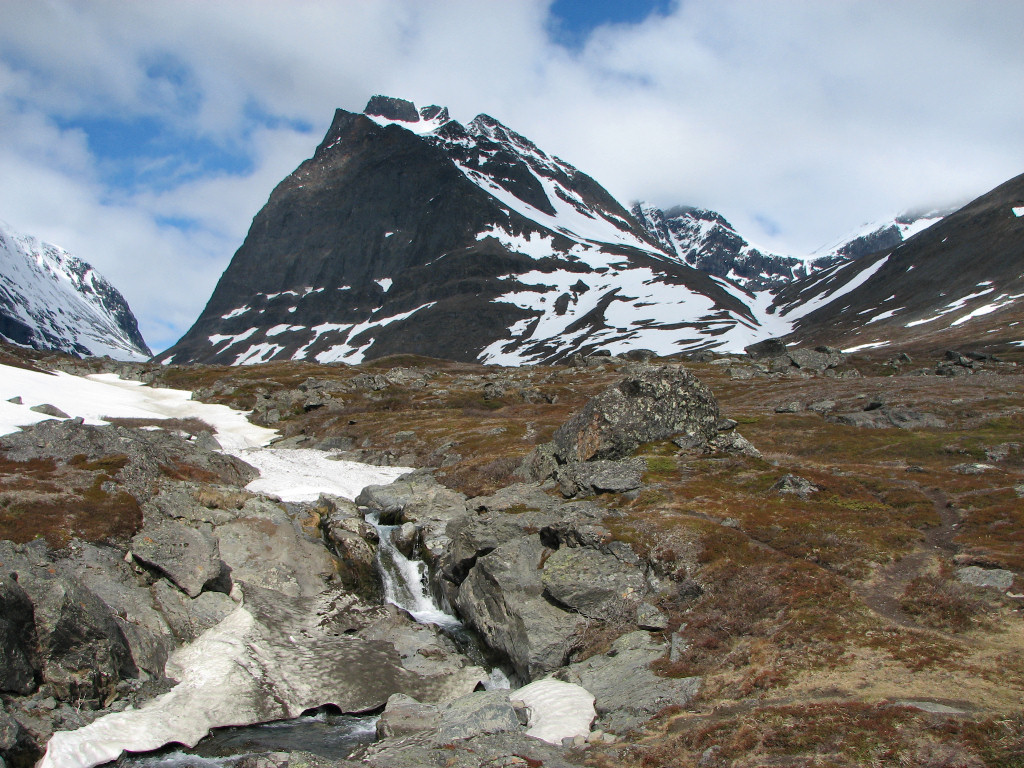
Duolbagorni etc.
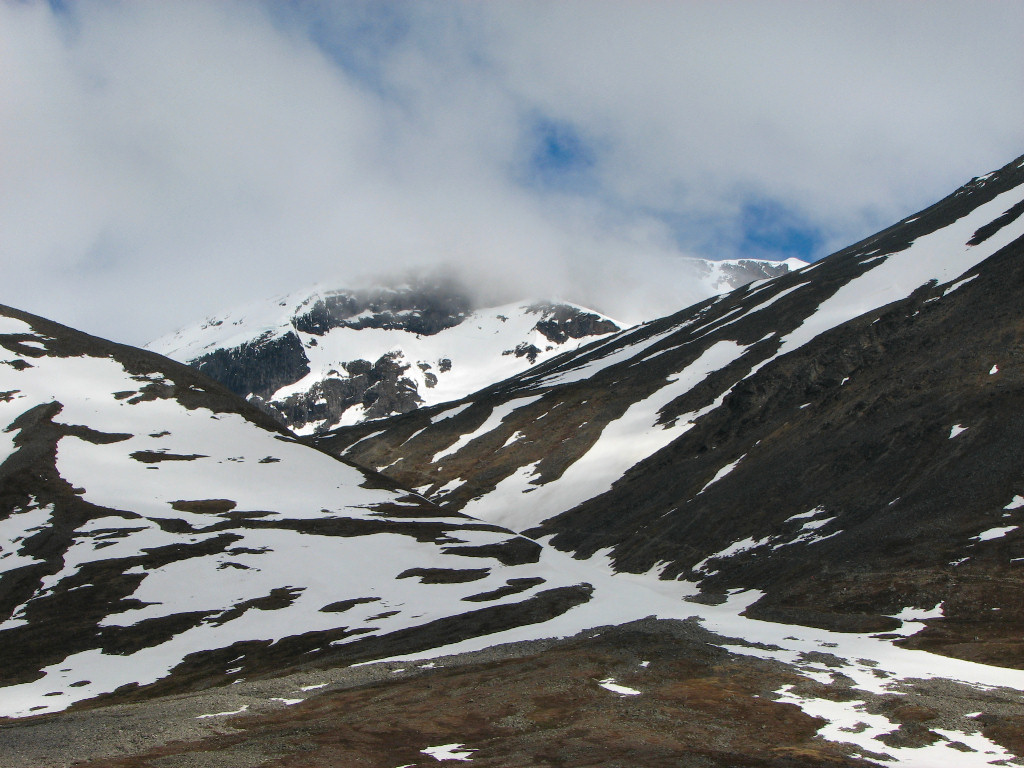
Peek of the South Peak
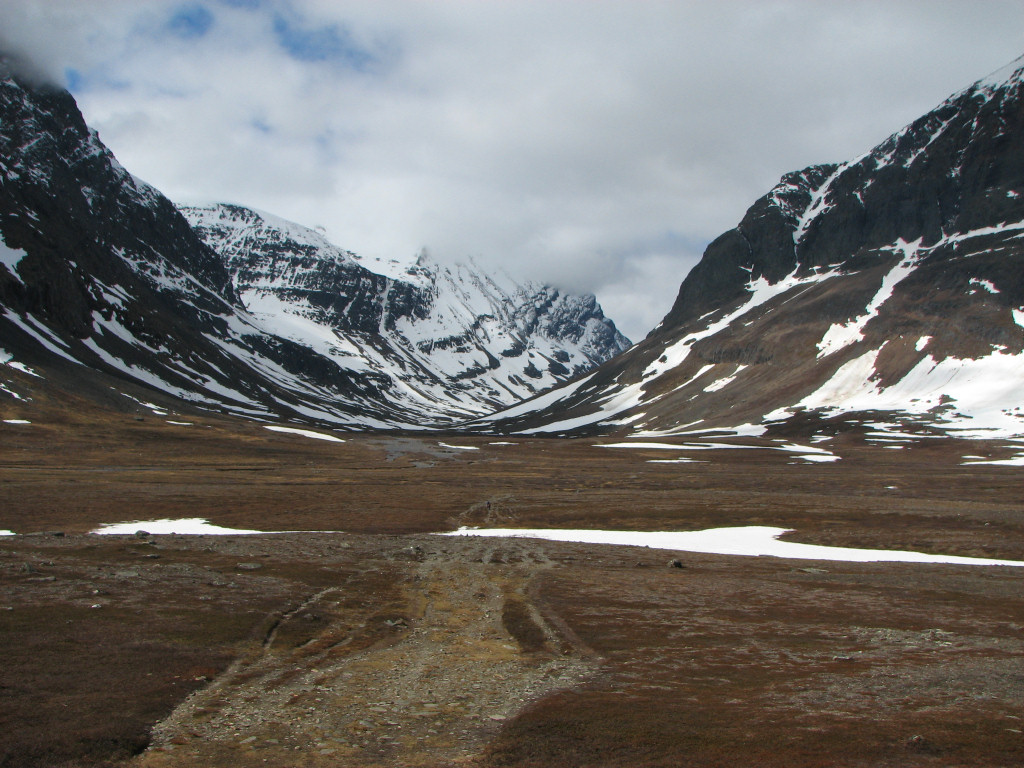
Flat
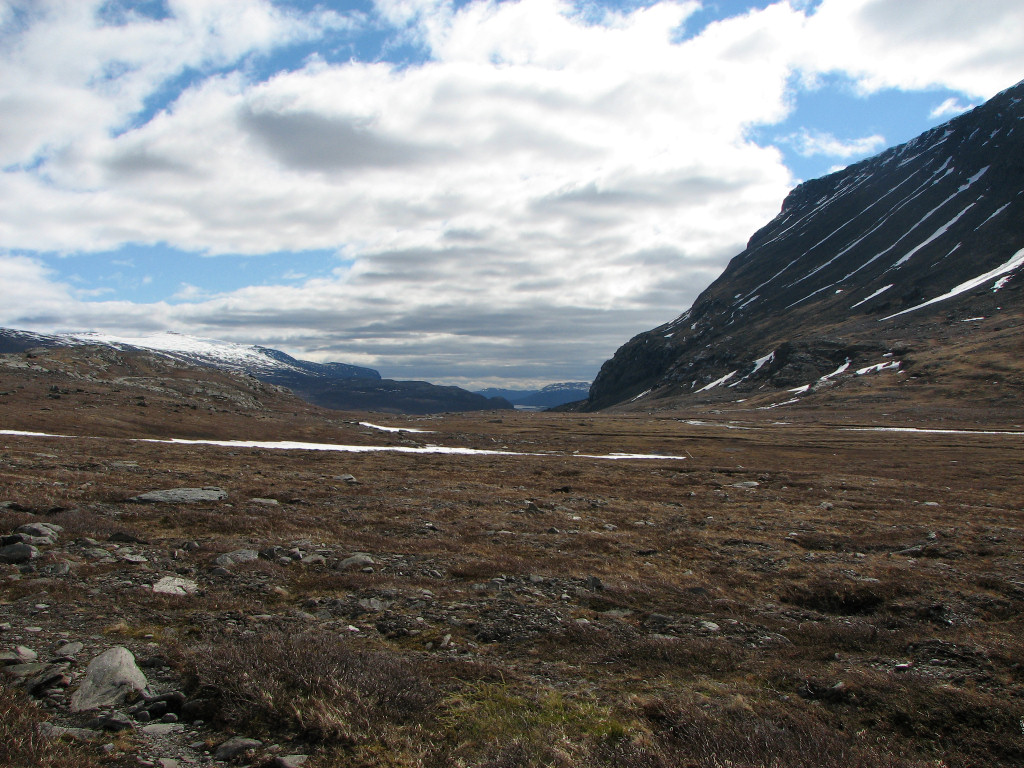
Láddjuvággi
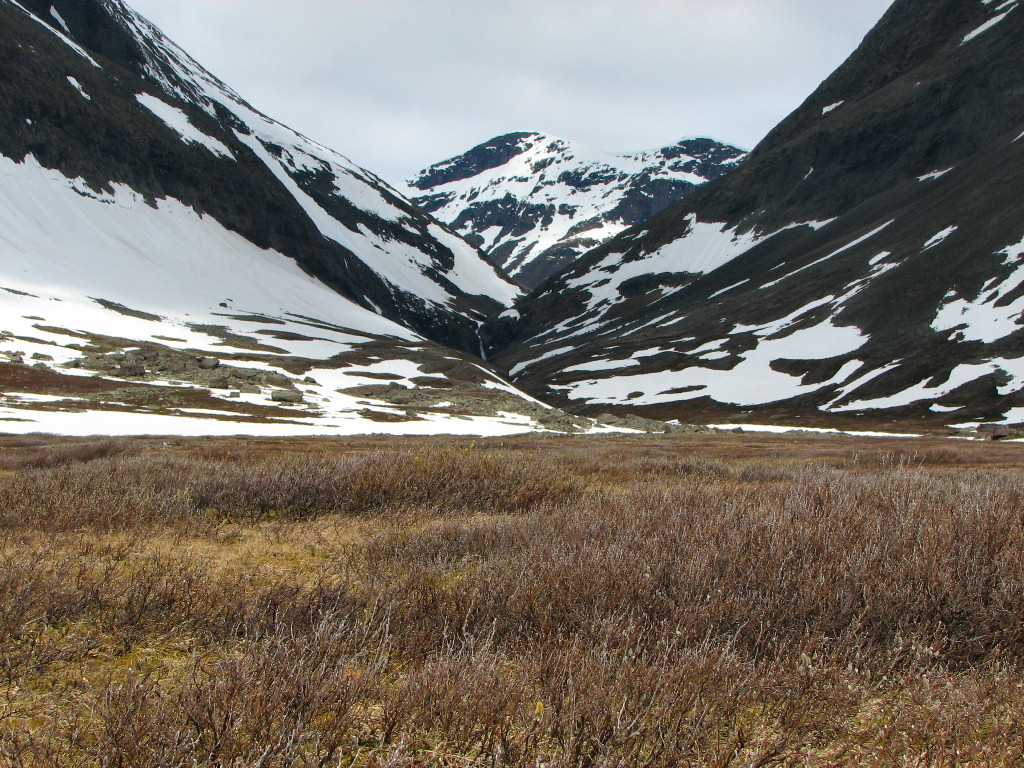
Silverfallet (Silver Fall)
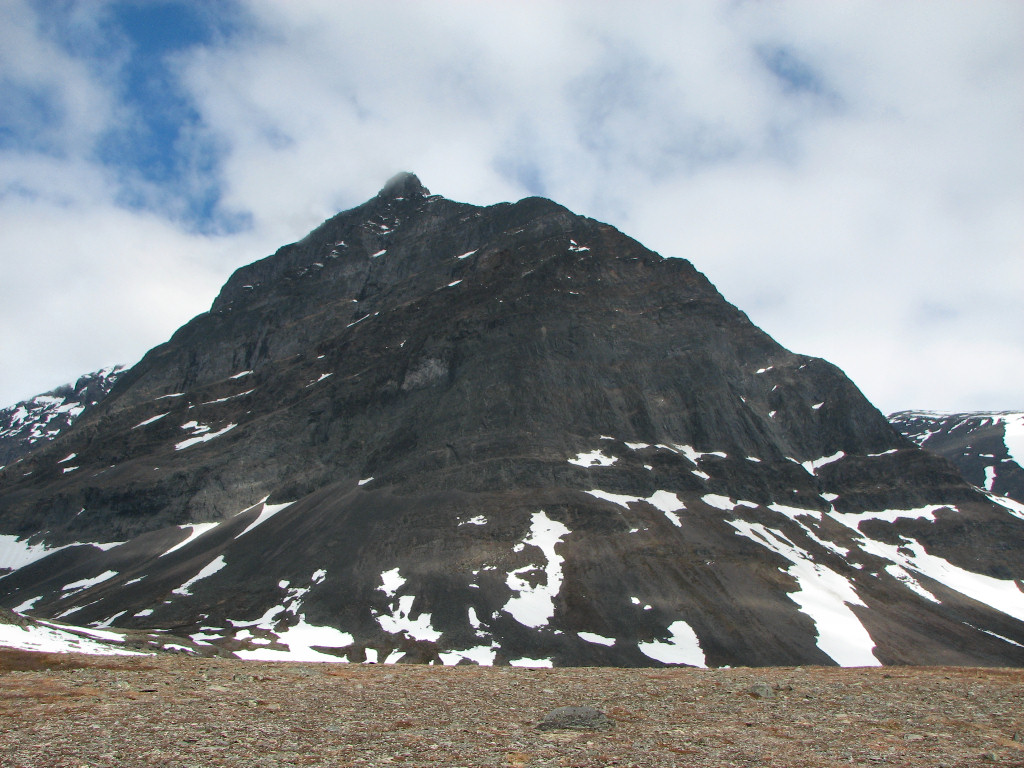
Passing Duolbagorni
The sun was now passing into the clouds clutching the summits of Skárttoaivi and Liddubákti, and the wind immediately turned cold indeed. As the valley narrowed the snowfields grew in number and extent, for here the trail crossed many a shallow hollow. Some I walked across, and some I walked around, depending on how the ground looked. Some weak sun found its way through the clouds before it was time for the next ones and now my hands were starting to feel cold. Further ahead things looked fair enough, however.
The Láddjubahta lakes were covered in ice, and soon after passing those I came to a bare signpost, at the base of which I found what I was looking for: the pointer to Kaitumjaure. The sun was almost breaking through as I turned off and crossed the stream with ease by way of a snowfield. More of those followed, and then I sat down in the shelter of a rock beside the trail before 11:45 to have lunch.
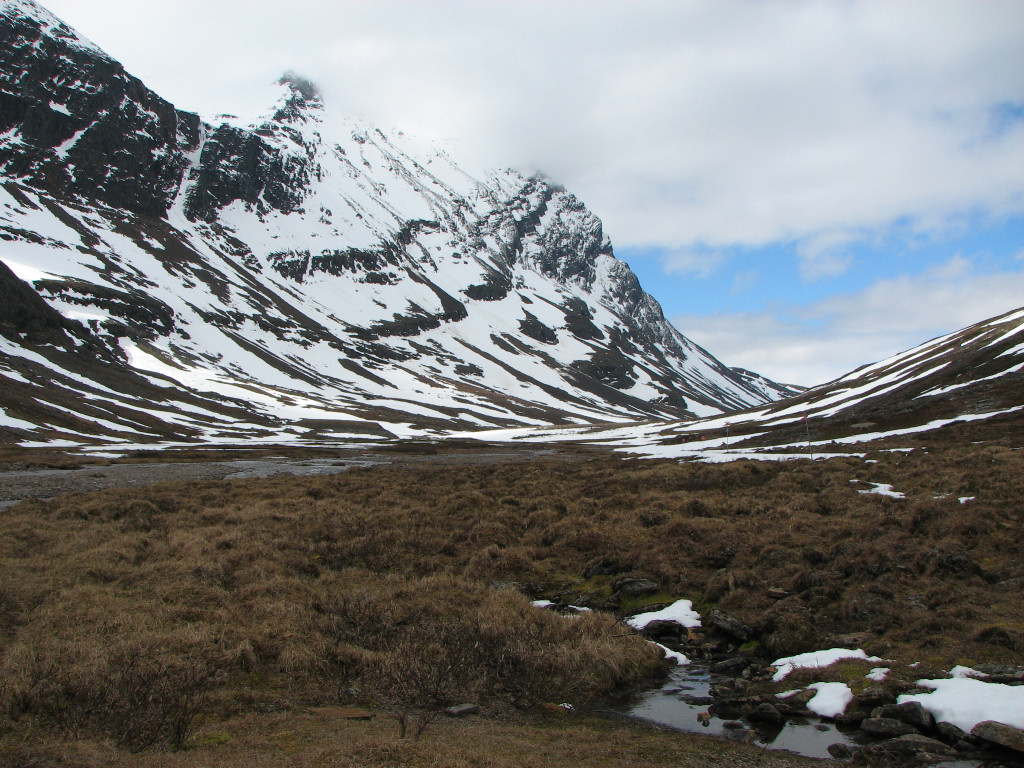
Entering the narrow part of the valley
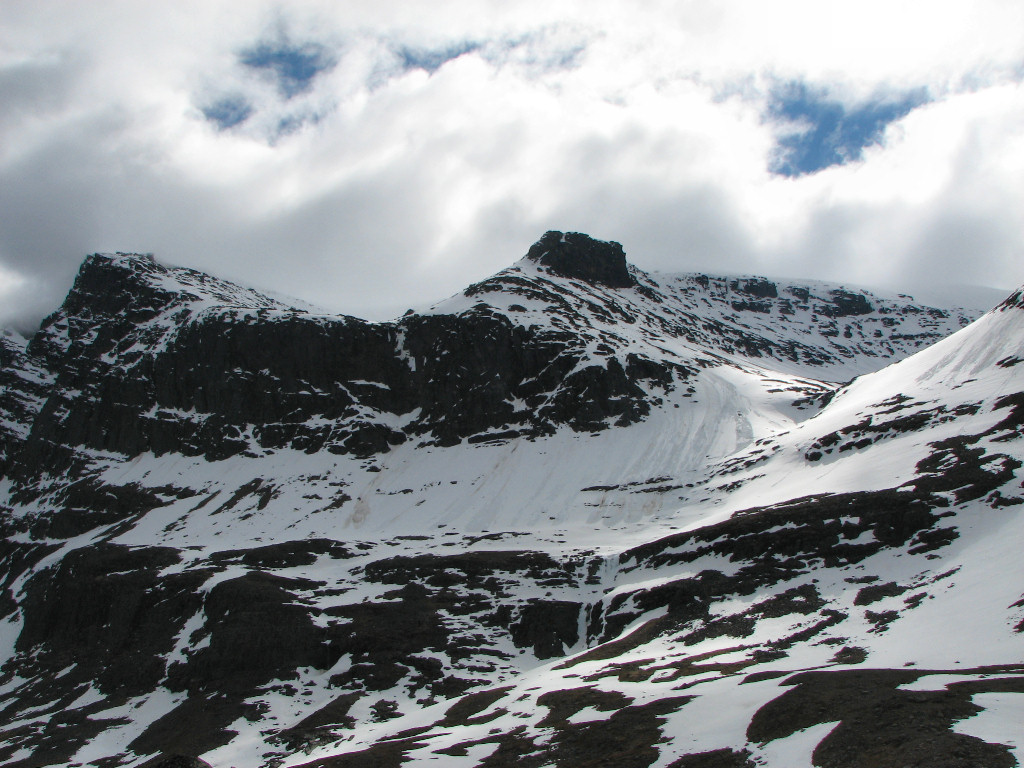
Jagged Skárttoaivi
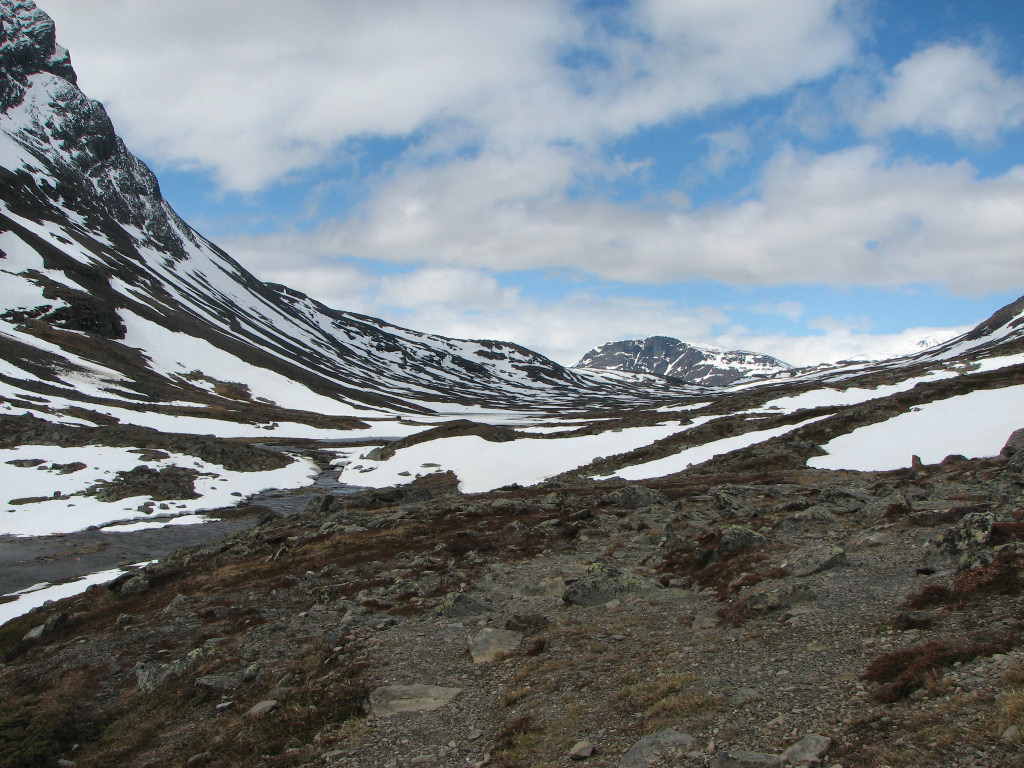
Unna Avrrik appearing
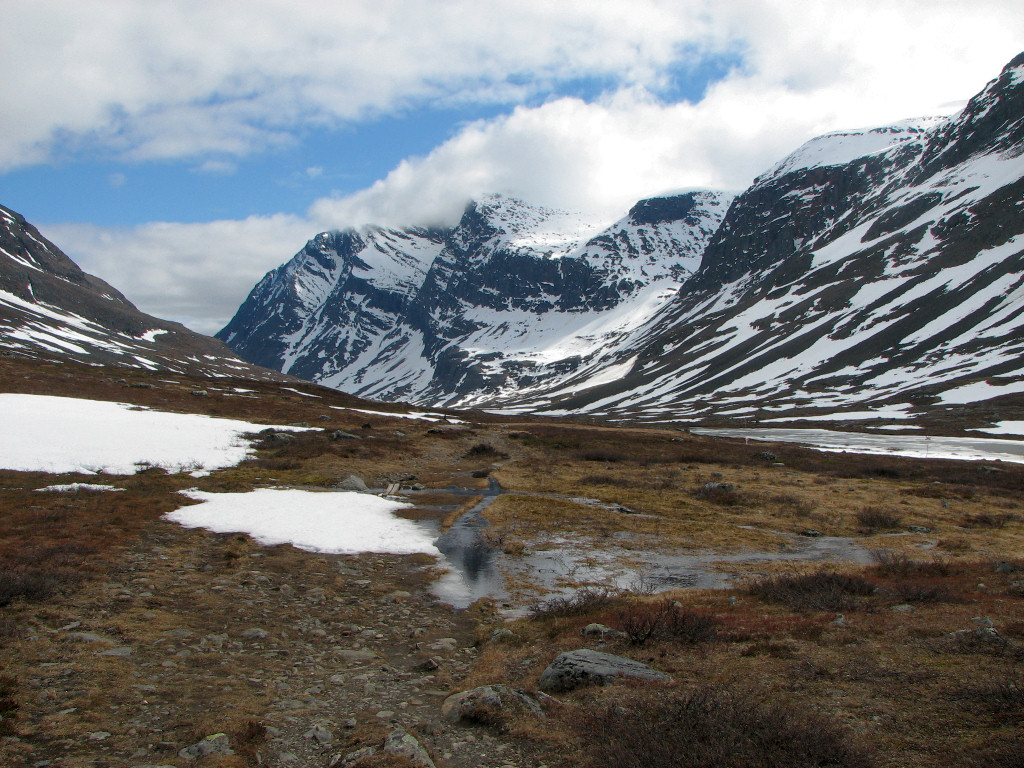
Looking back
This time I brought out the fleece jacket, even though the sun did make a few brief visits. As I ate Anders and Tina also stopped on the trail on the other side of the stream, but then I lost track of them. When I got up again I put on the gloves against the chill and immediately had to negotiate a large snowfield which only partially carried my weight. Higher up the somewhat steep slope the ground got better, but there were still quite a few snowfields before me. There was less wind, however, and the lakes were completely covered in ice.
I continued to circumvent the snow where I could, passing what I believed to be the rock I had sat against when coming this way in winter. The slope down the other side was steep enough, which took a bit of a toll on my knees. I mostly walked to the north of the path, since there was less snow there, but I still had to cross a fair bit of the white stuff lest I end up in dense osier thickets instead. The clouds to the north were lifting, revealing brilliantly white peaks, and closer by I soon spotted the Singi cottages.
After a suspiciously long time I reached Kungsleden, where there were more snowfields in the way, but there were also fresh bootprints so perhaps I would have company in the evening. As the condition of the trail improved I increased my speed, eager to reach my destination as early as possible. The cloud distribution was unchanged in that there were much more of them to the south. When I reached a crest before a large expanse of flatter ground I was hit by more wind again, but then it was easy walking on a very nice path. It was after 14:30 when I decided it was time for another break, and I sat against yet another rock at the side of the trail, where I had another sandwich and a biscuit.
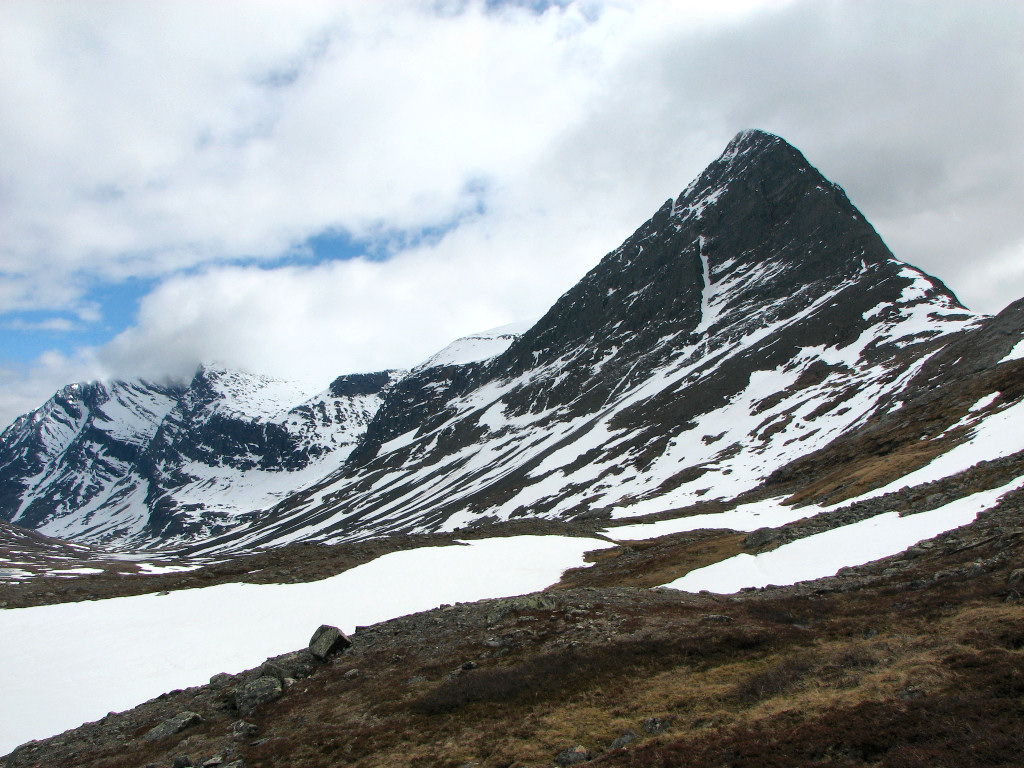
Sharp-edged Liddubákti
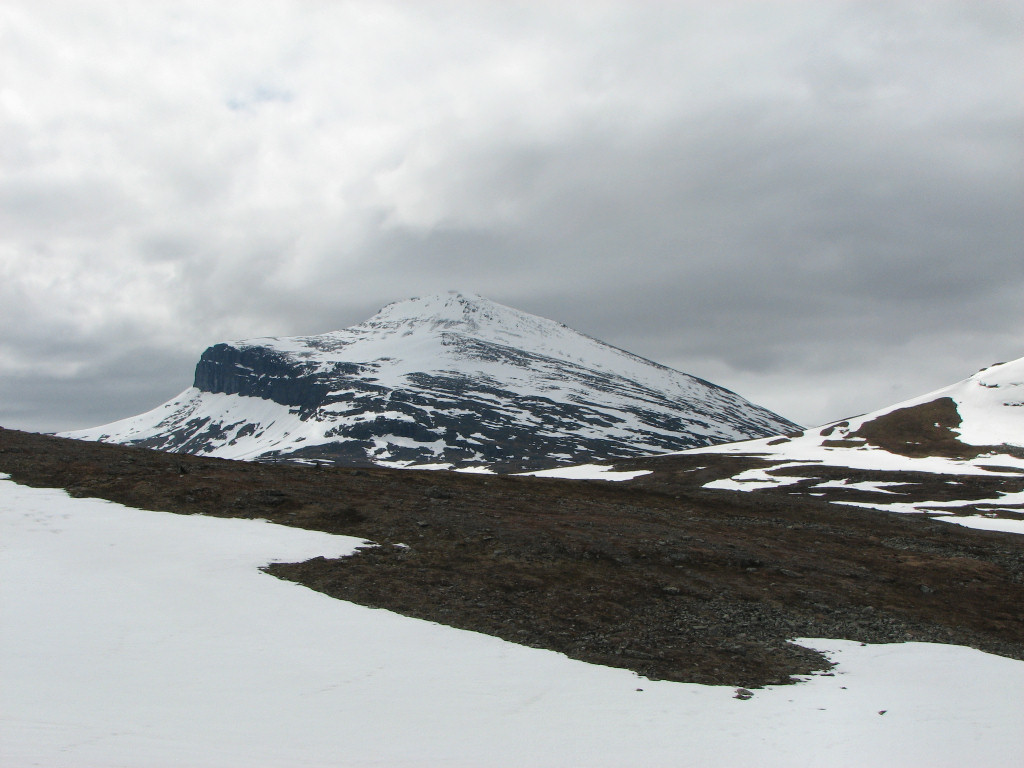
Stuor-Jiertá
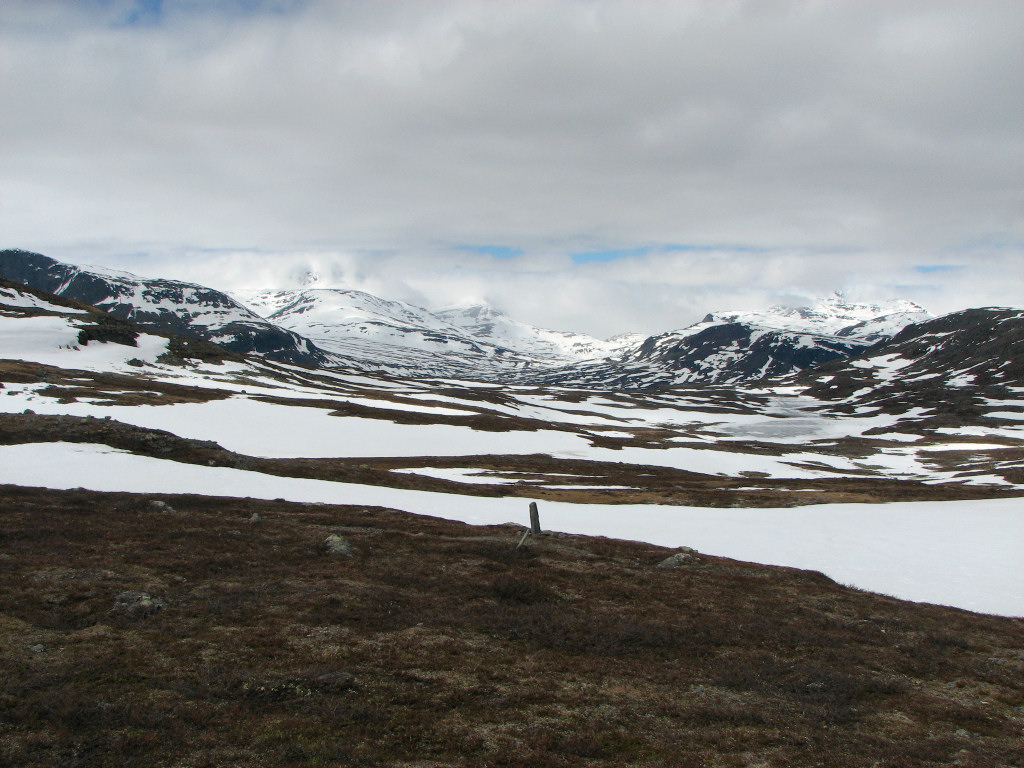
Beyond Singi
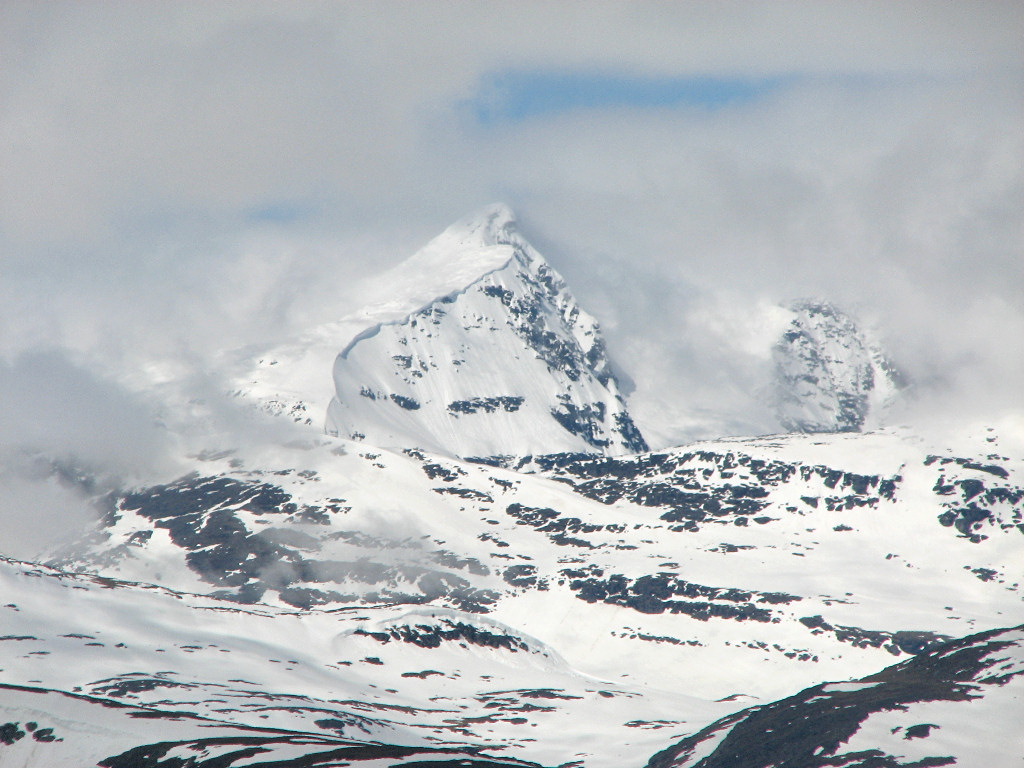
Sealggá among the clouds
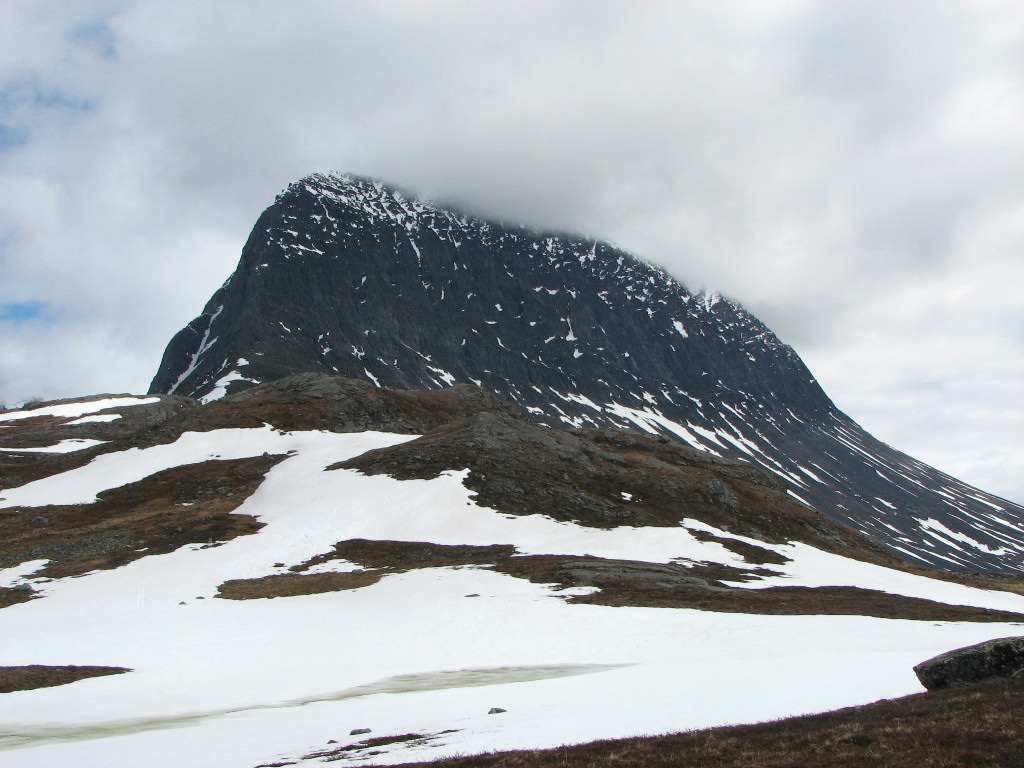
Liddubákti from the other side
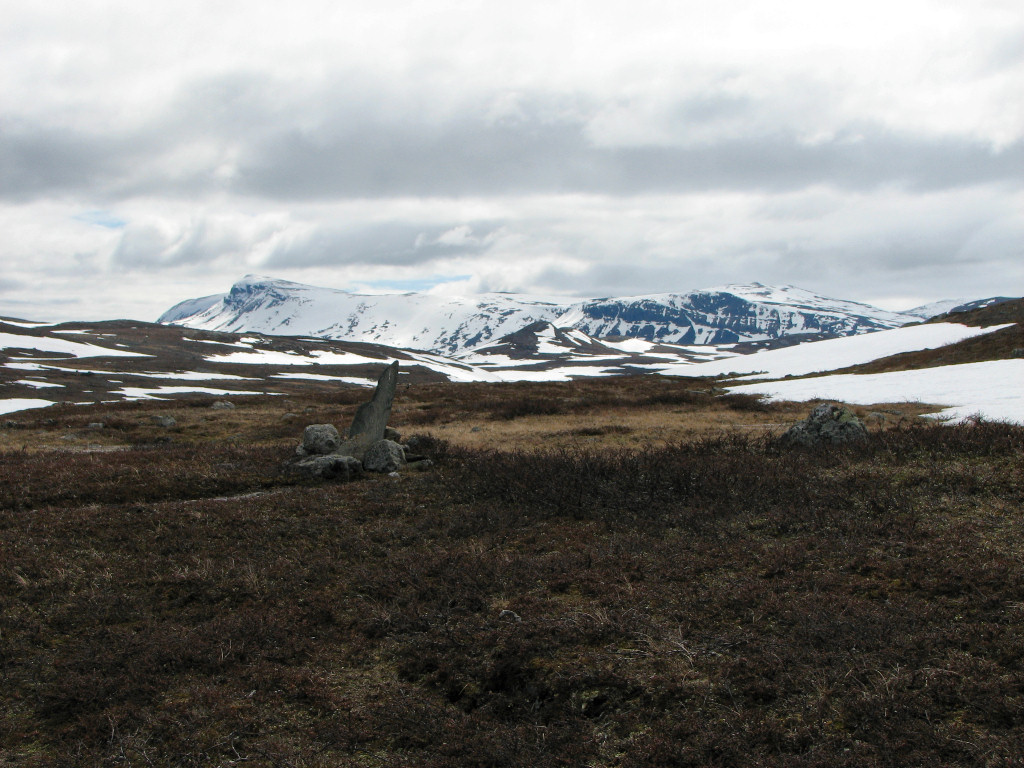
Up on the crest
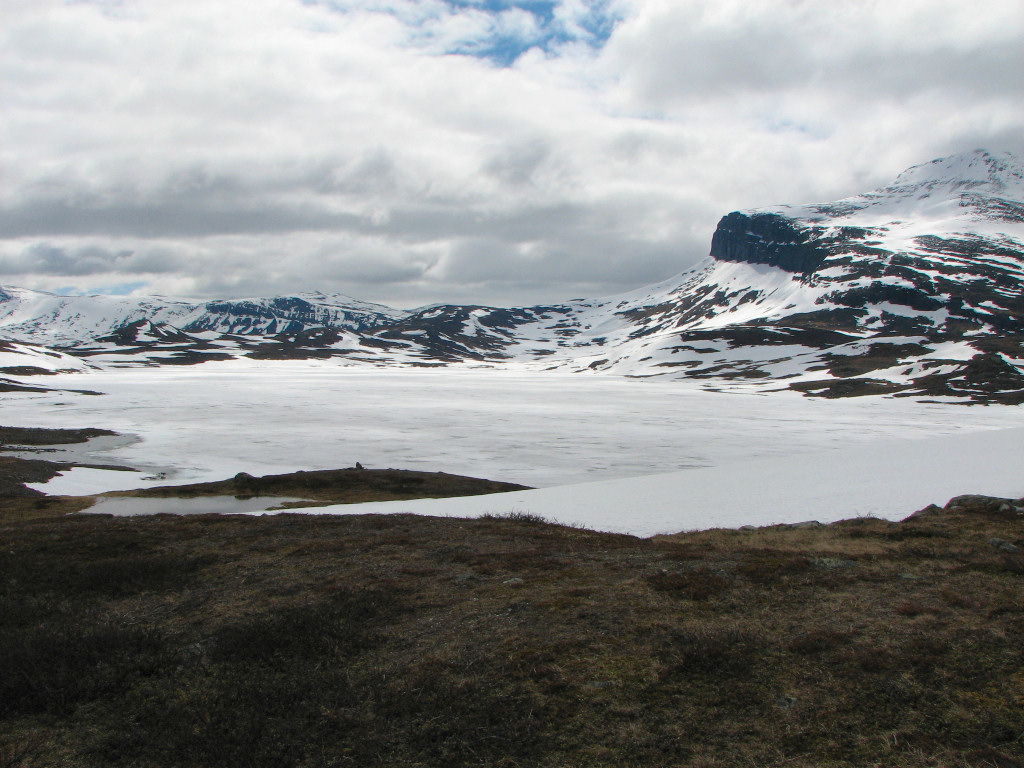
Jierttájávri iced
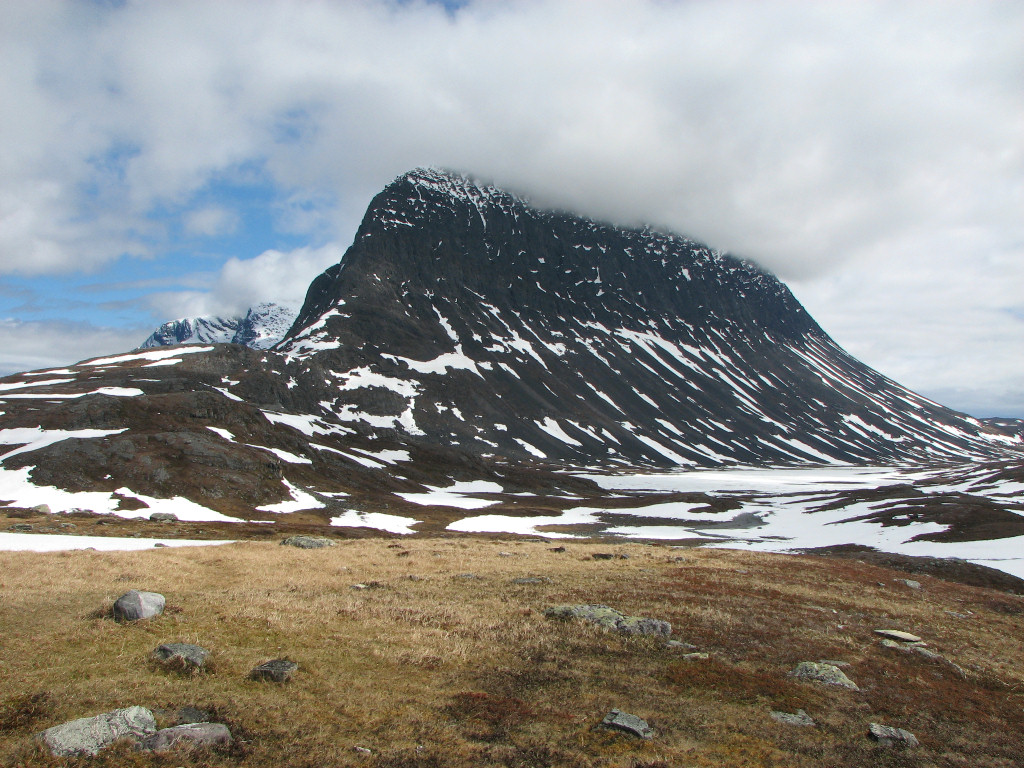
Liddubákti and Liddujávrrit
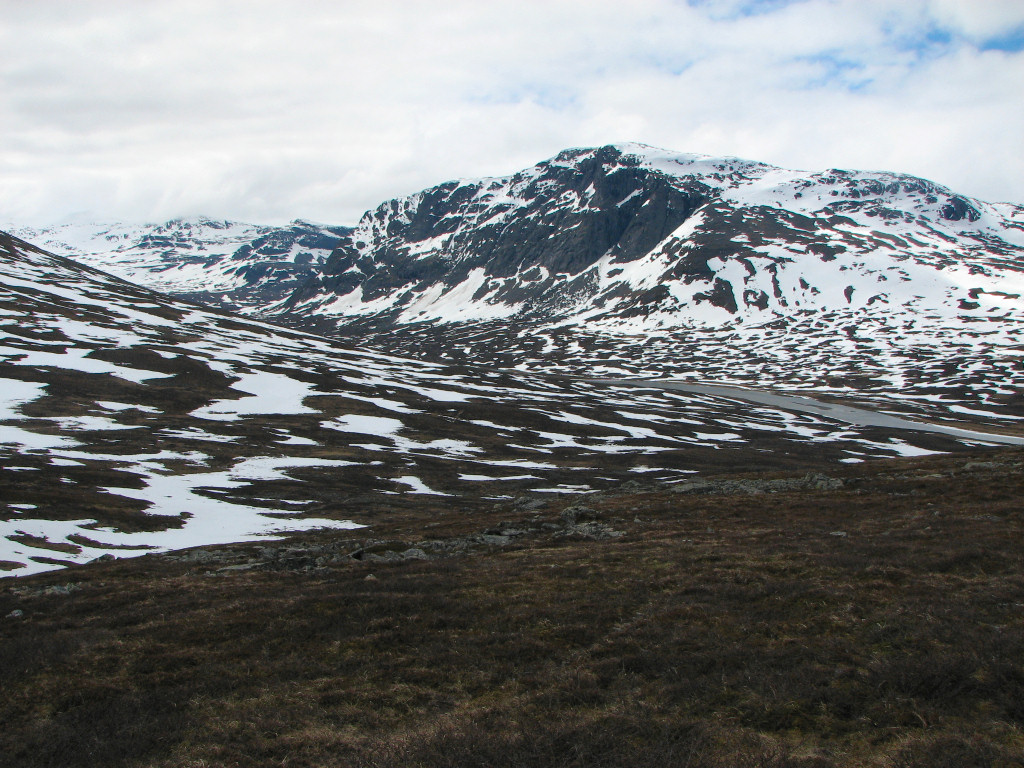
Stuor Avrrik and...
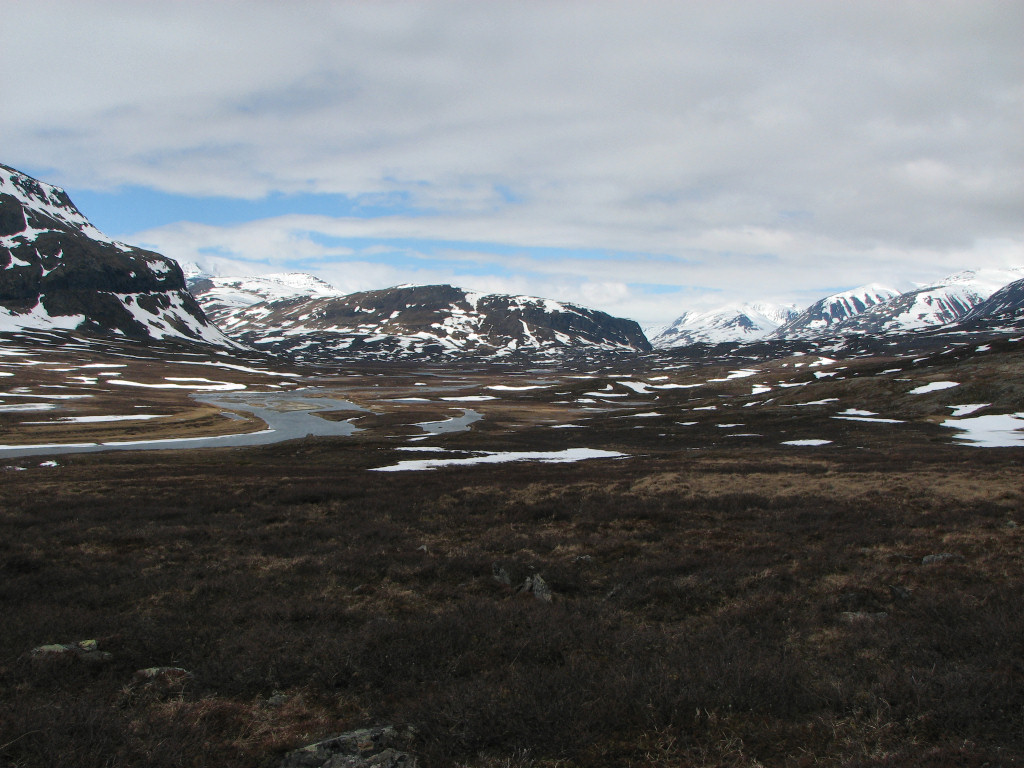
...Čeakčavággi
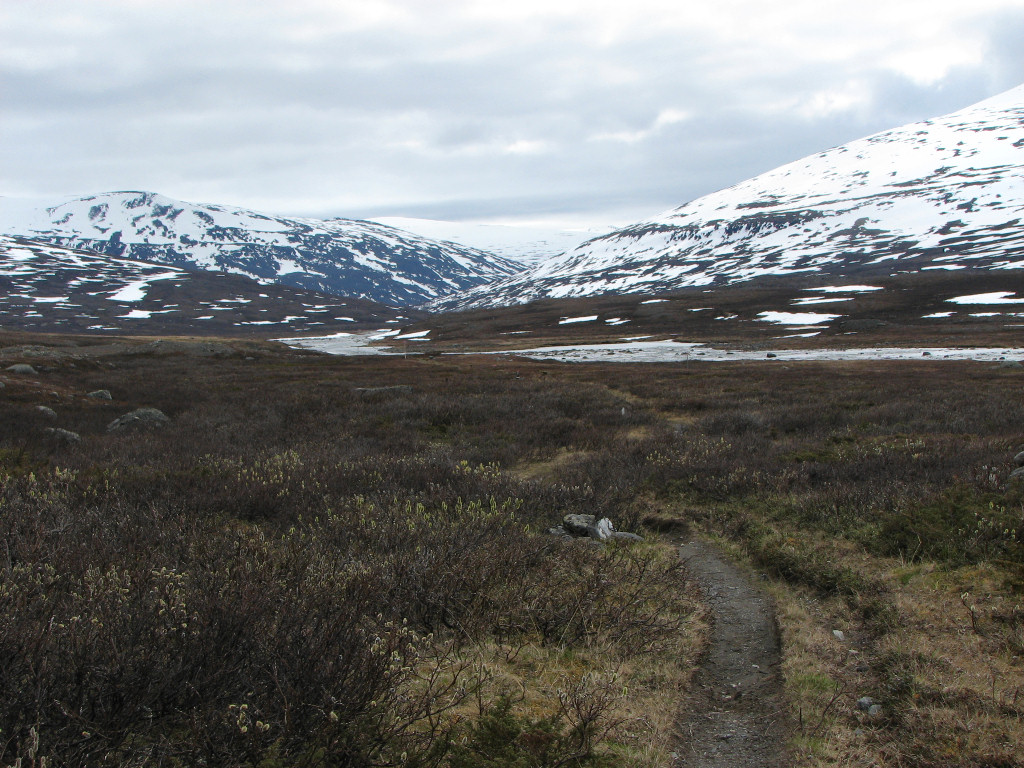
Closing in on Čeakčajohka
I didn't remain immobile for long, and back on the path I was pleased to find this still perfect for low-effort walking. After a while the ground changed from grass to heath, but the condition of the path was the same. On the plateau at the mouth of Gávgulvággi, where the skeleton of an old peat hut stands as a sentinel by the trail, there were enough campsites to support a medium-sized town, which I duly noted. Then followed a short but slightly taxing uphill portion, at the top of which an illegible wooden sign pointed out what looked like an older route of the trail, with marking cairns and all, but the main path very clearly continued on in a straight line down to the bridge over Čeakčajohka, which cannot be forded here.
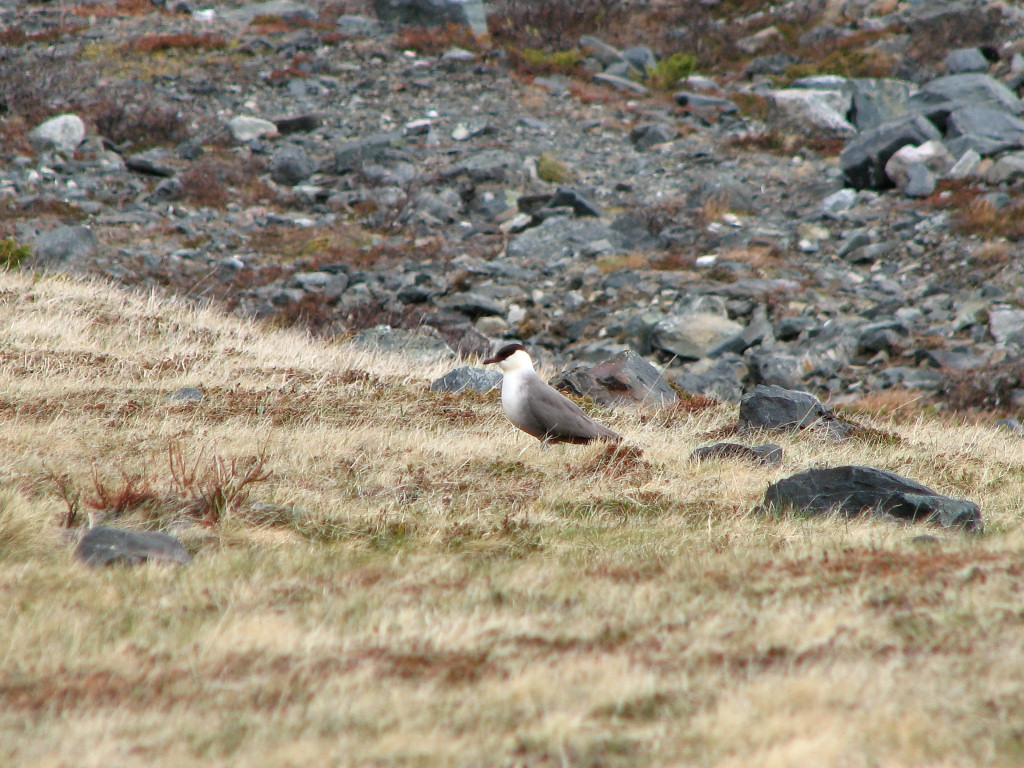
Long-tailed jaeger
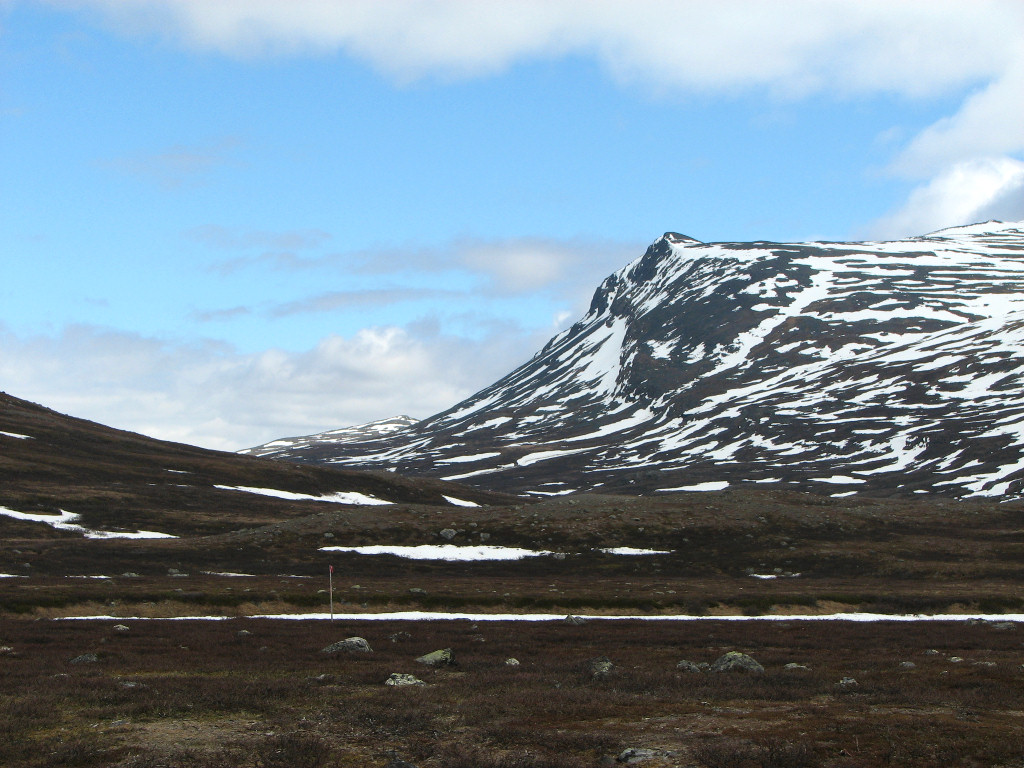
Mouth of Sáŋarvággi
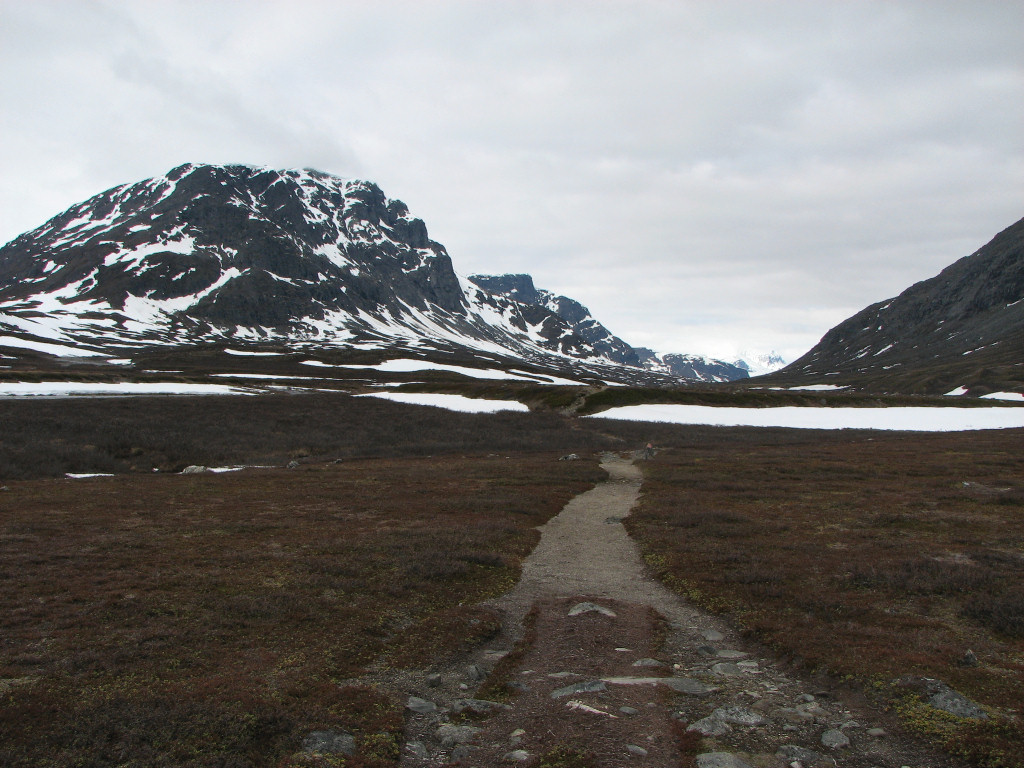
Čeakčavággi north
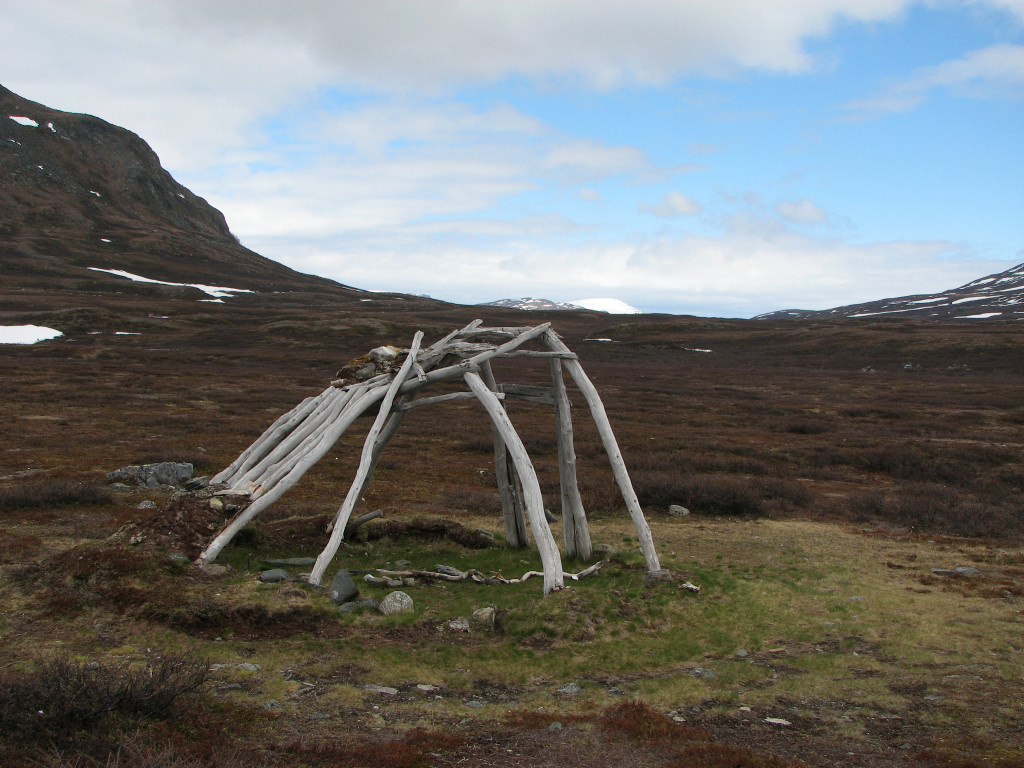
Ex-hut
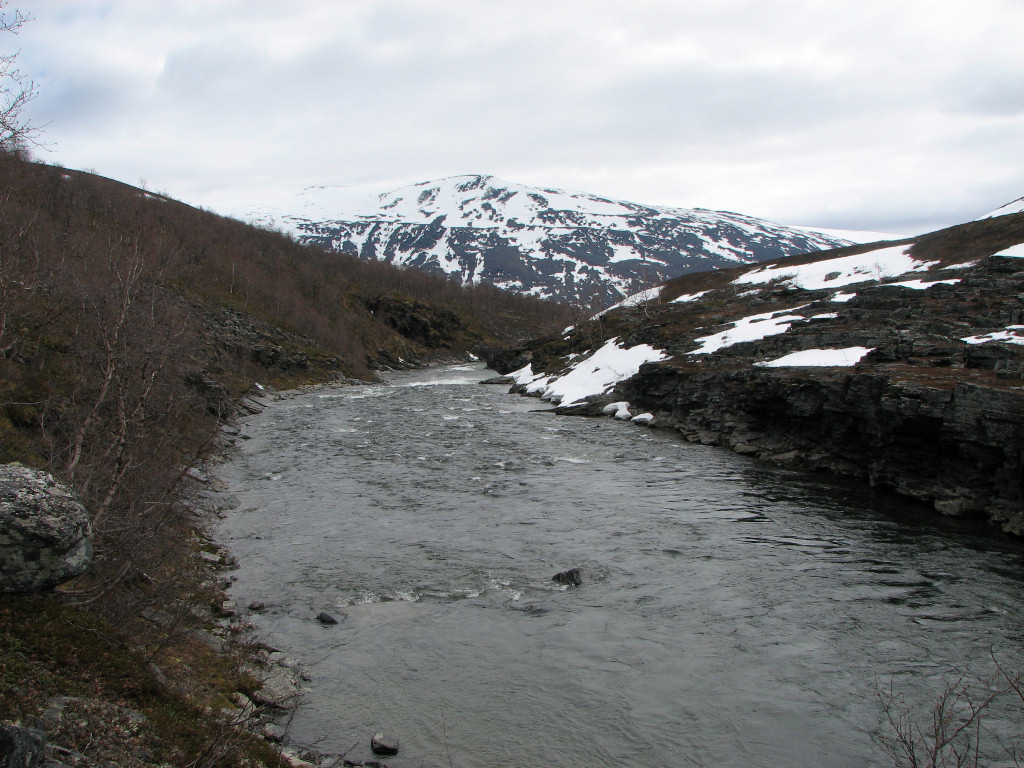
At the Čeakčajohka bridge
On the other side the snow made for a tricky bit over the rocks, but then it was back to mostly nice footpath upon the high brink of the stream. The clouds seemed to be growing somewhat lighter as I passed and noted another great campsite, and then the trail entered sparse forest just on the verge of budding. A short open area gave way to a short slope up through another band of trees, and on the subsequent crest I finally laid eyes on the cottages. Bajip Gáidumjávri looked wholly free of ice, which felt good, but the very last bit up to the buildings involved more snow-walking. It was after 16:15 when I emerged between the two upper houses, the farthest of which is the service building containing the warden's room, which is where I headed.
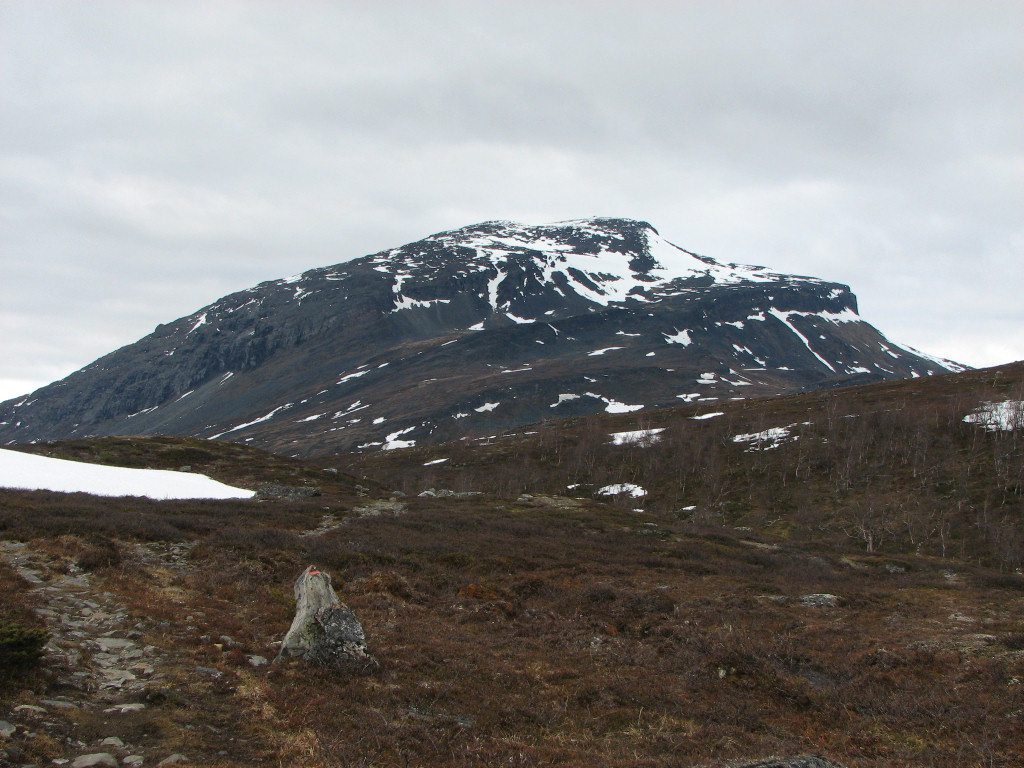
Stuor-Jiertá from the other side
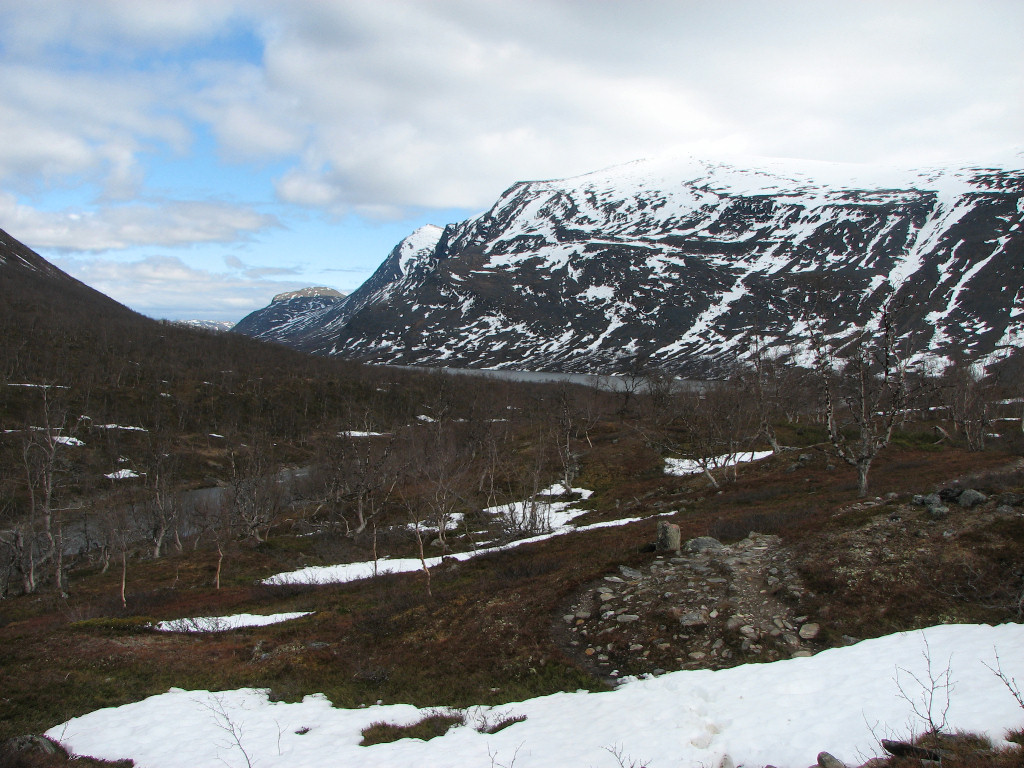
First sight of Bajip Gáidumjávri
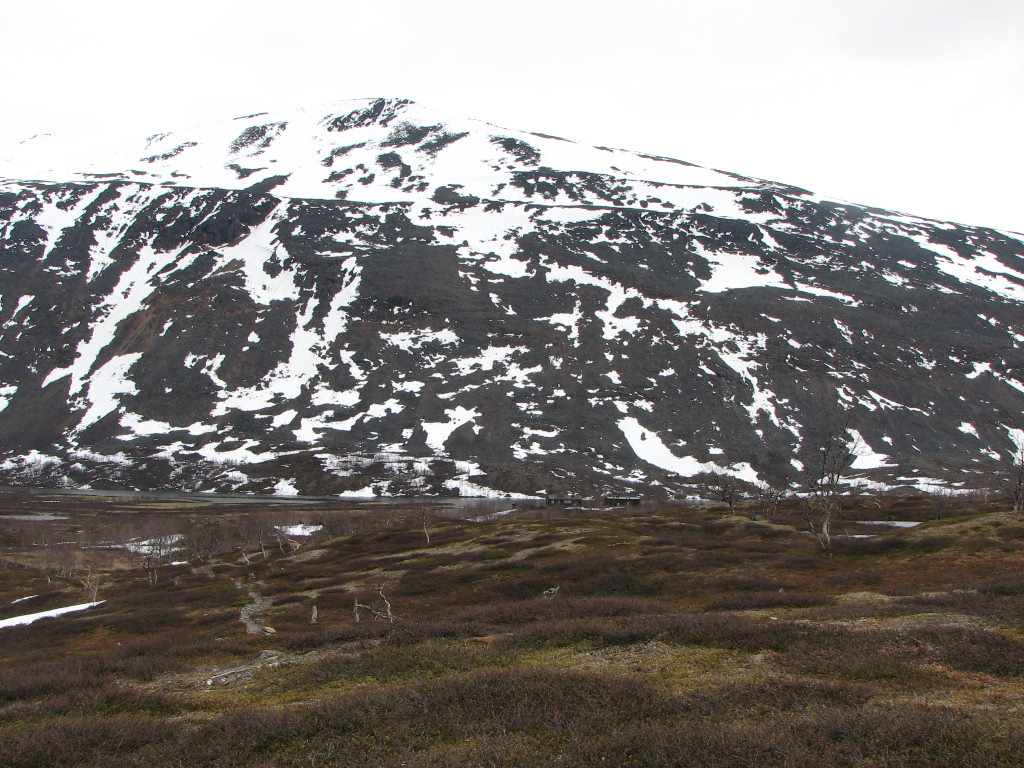
First sight of the cottages
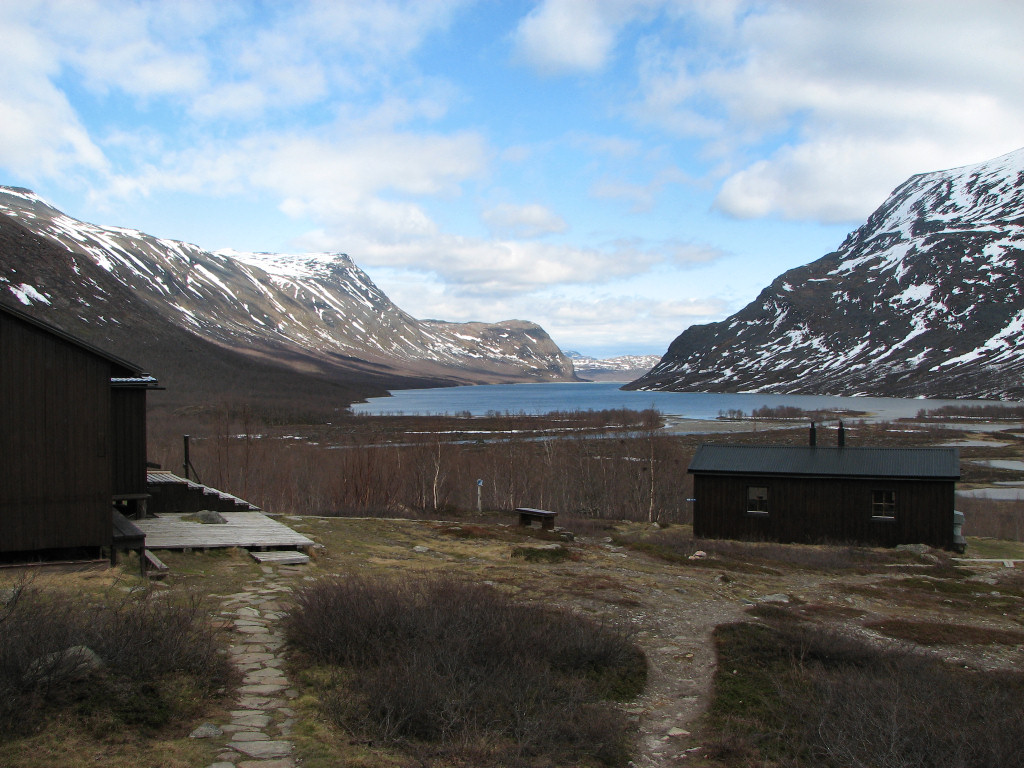
There at last