Thursday 25/6 – part one
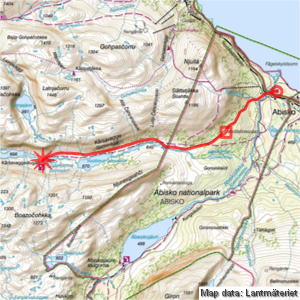
Abisko – Kårsavagge
| Horizontal distance: | 14 km |
| Vertical distance: | +300 m |
| Time: | 4 h 15 min |
| Lunch break: | 30 min |
| Dinner: | – |
| Night accommodation: | – |
| Stage classification: | Medium |
| Map points: | Abisko, Kårsavagge |
There was an unexpected train change in Boden early in the morning, resulting in sparse passenger distribution in seated wagons. As we passed Murjek there were clear traces of a recent derailing, including several flipped-over ore wagons beside the (newly laid) tracks. In Kiruna a light rain was falling, but as we moved northwestwards the sky cleared. The first batch of fjelds thus passed were rather summery in their appearance – somewhat more so than expected, actually – but later on, further off to the northwest things looked much snowier.
The train very nearly arrived on time, and I immediately walked over to the Abisko tourist station, beating the line at the reception that always forms when the train pulls in. Here I received some things I was to carry out to the cottage, including the key set. These things also included some rather large signs, but I did manage to get everything into or fixed onto the rucksack without much trouble. At 11:30 I was ready to leave, and did so without the wind jacket as it looked to be a fair day.
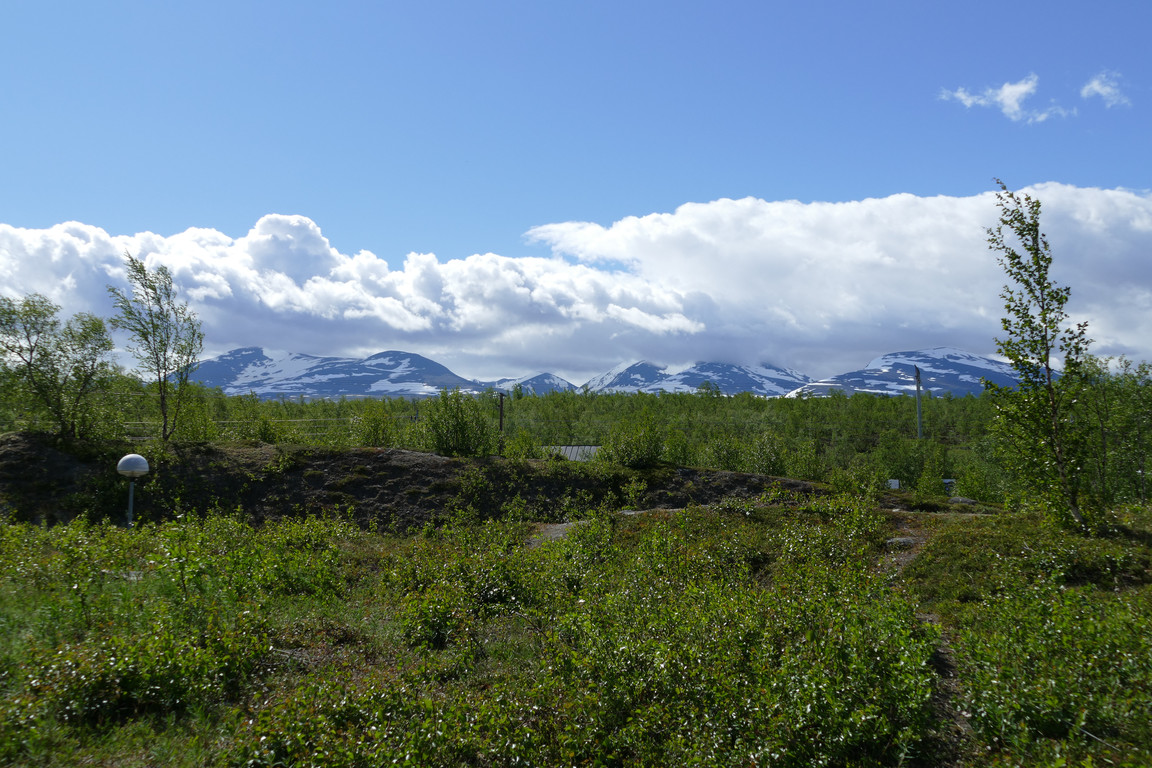
Abiskoalperna
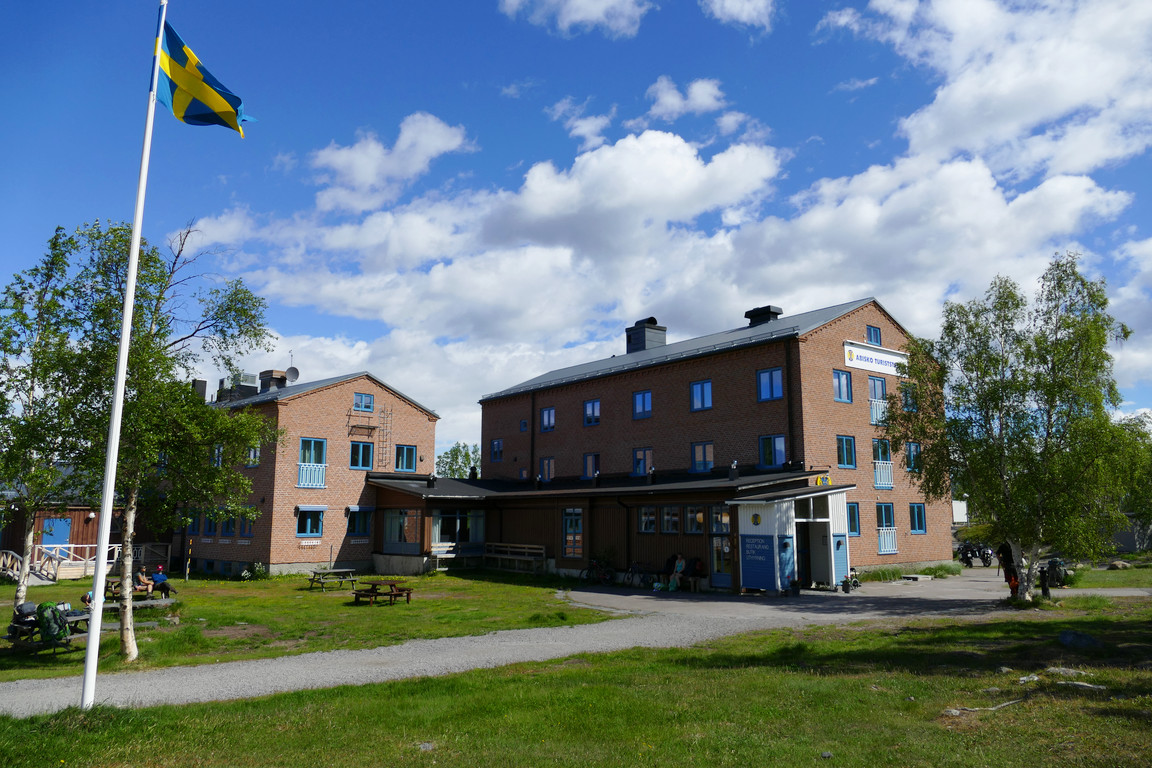
Abisko tourist station
I walked through the new Kungsleden portal, noting a good number of flowers along the path, and then took the (painted) tunnel to the actual start of said trail. There were no signs pointing out the start of the Kårsavagge trail, however, until I reached the point where the path branches off from the cableway road on the western side of Ábeskoeatnu. This path was dry and good, and walking felt good too. Rihtonjira had enough water to overflow the duckboards there, but not by so much so as to cause problems. There were no mosquitos at first, but after the summer trail had broken off and started climbing through the forest some appeared, so I applied some repellant.
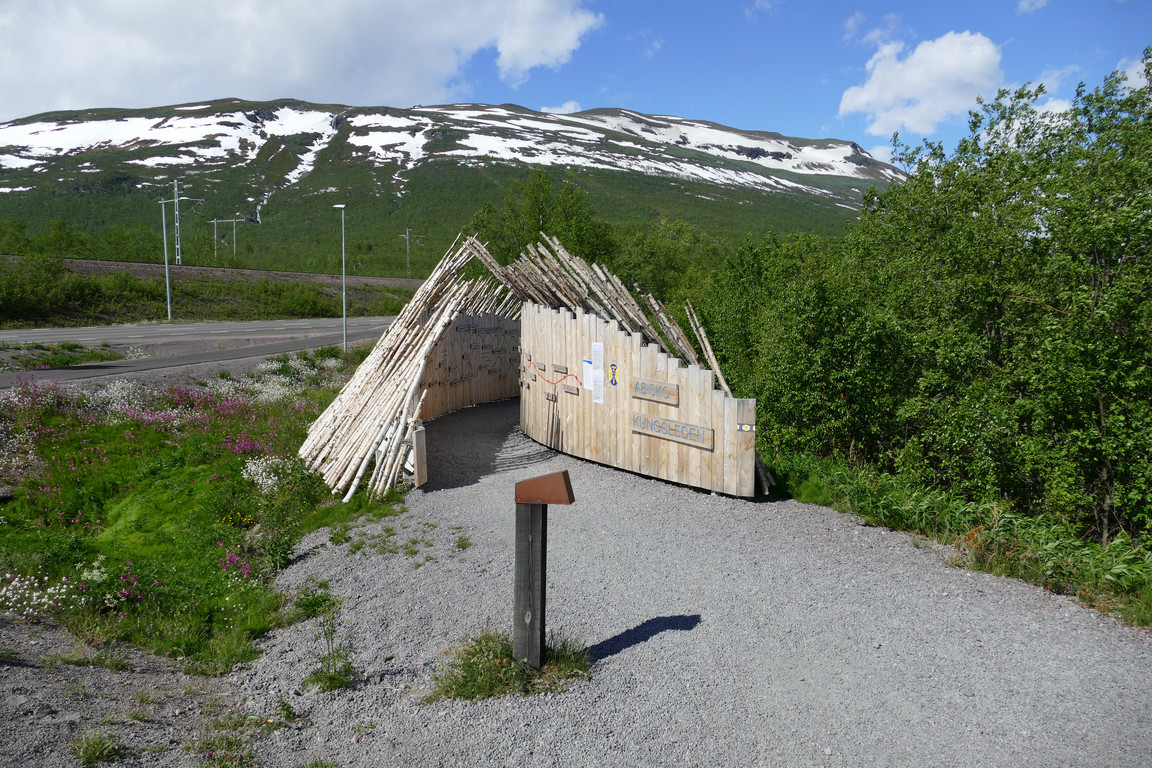
Kungsleden entrance
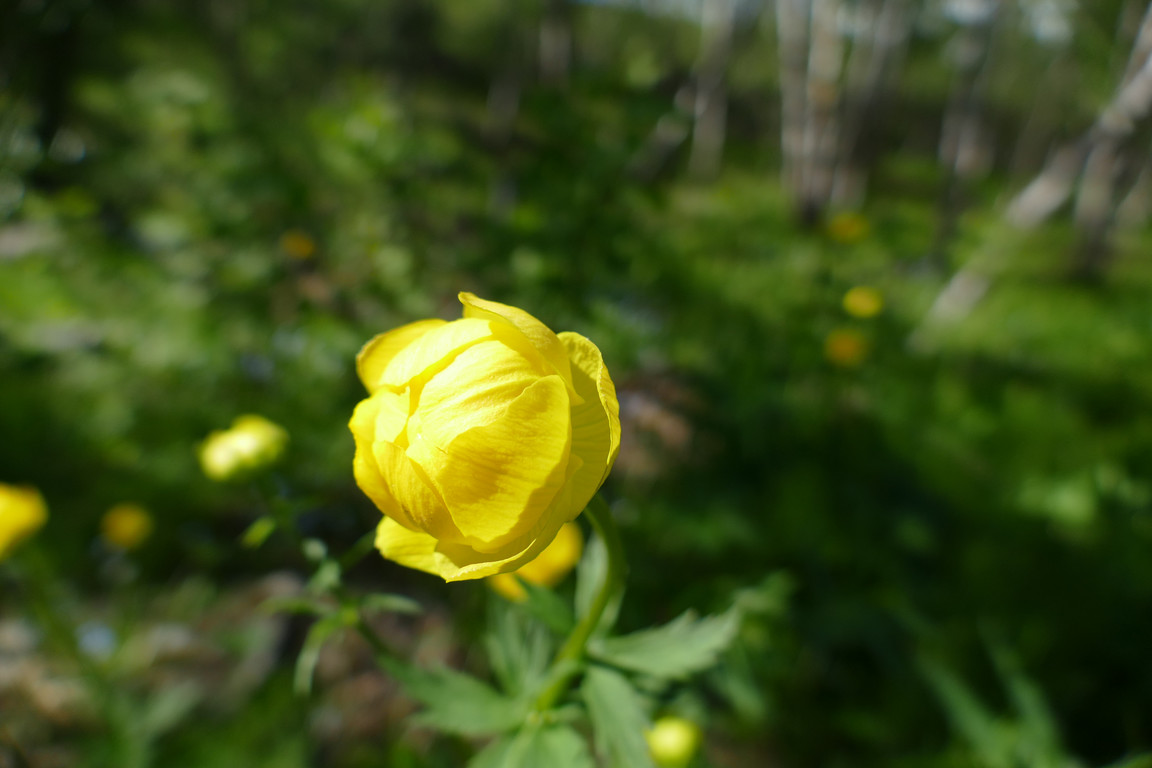
Sunny flower
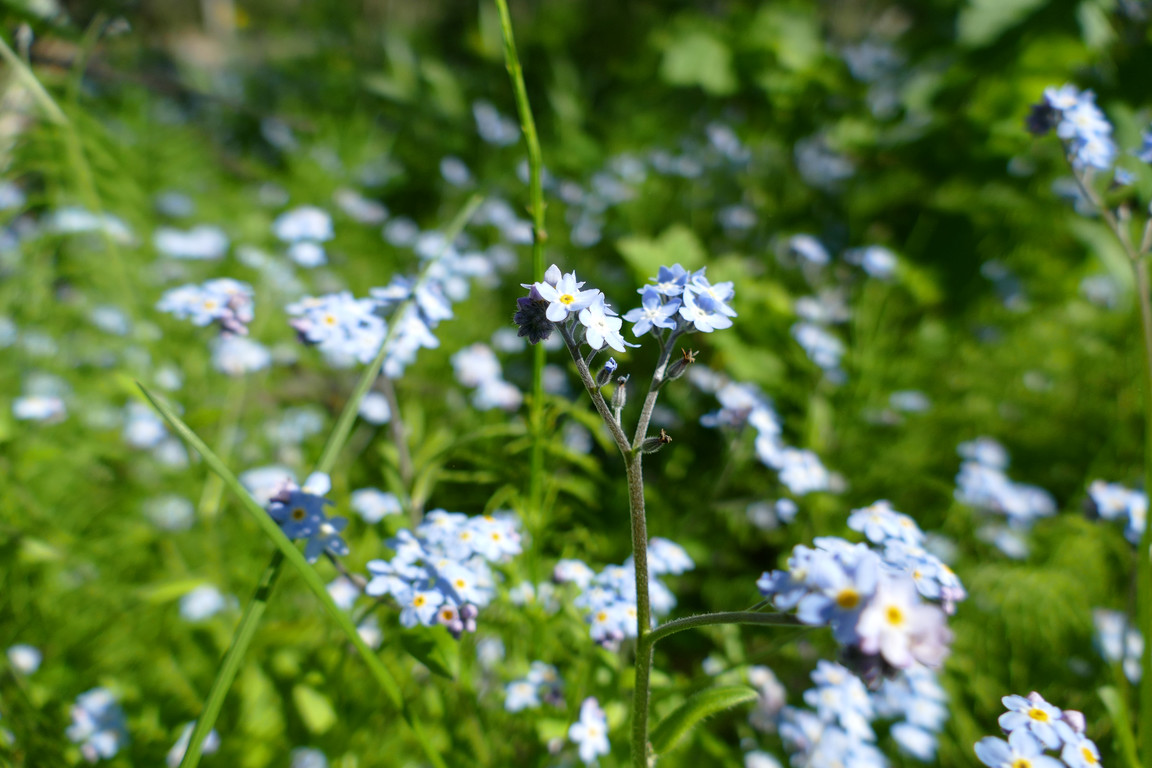
Heavenly flowers
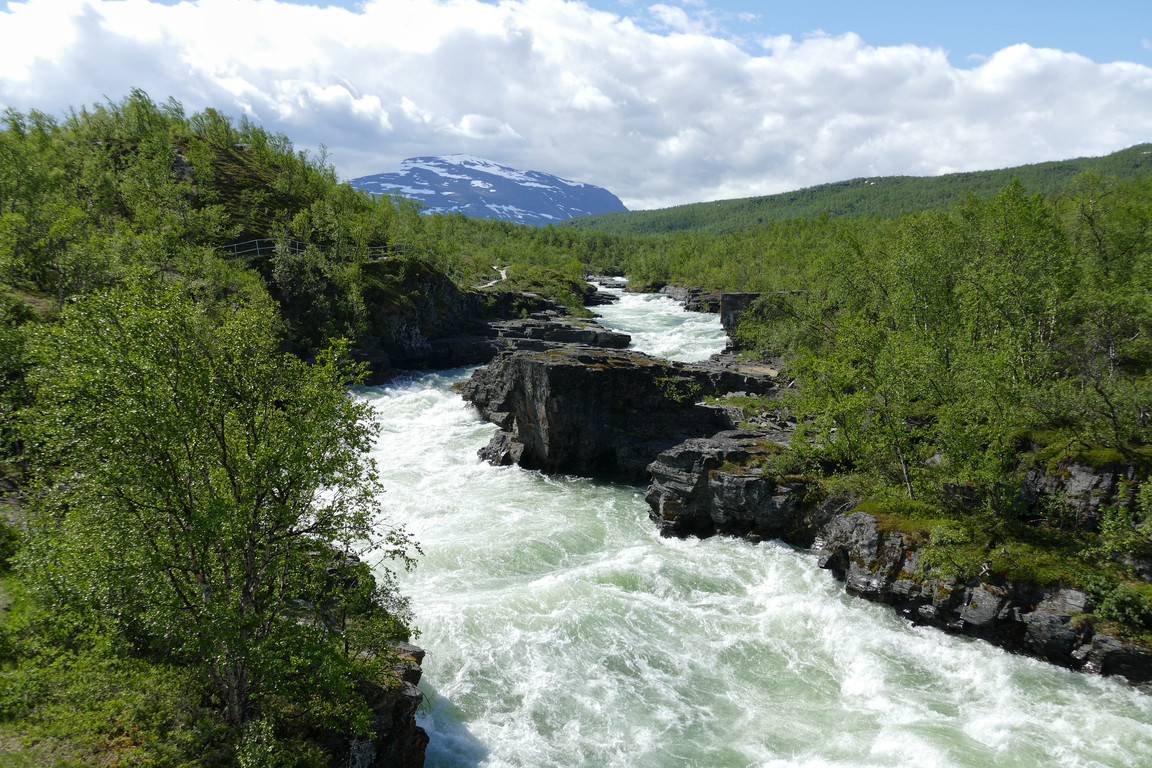
Ábeskoeatnu up
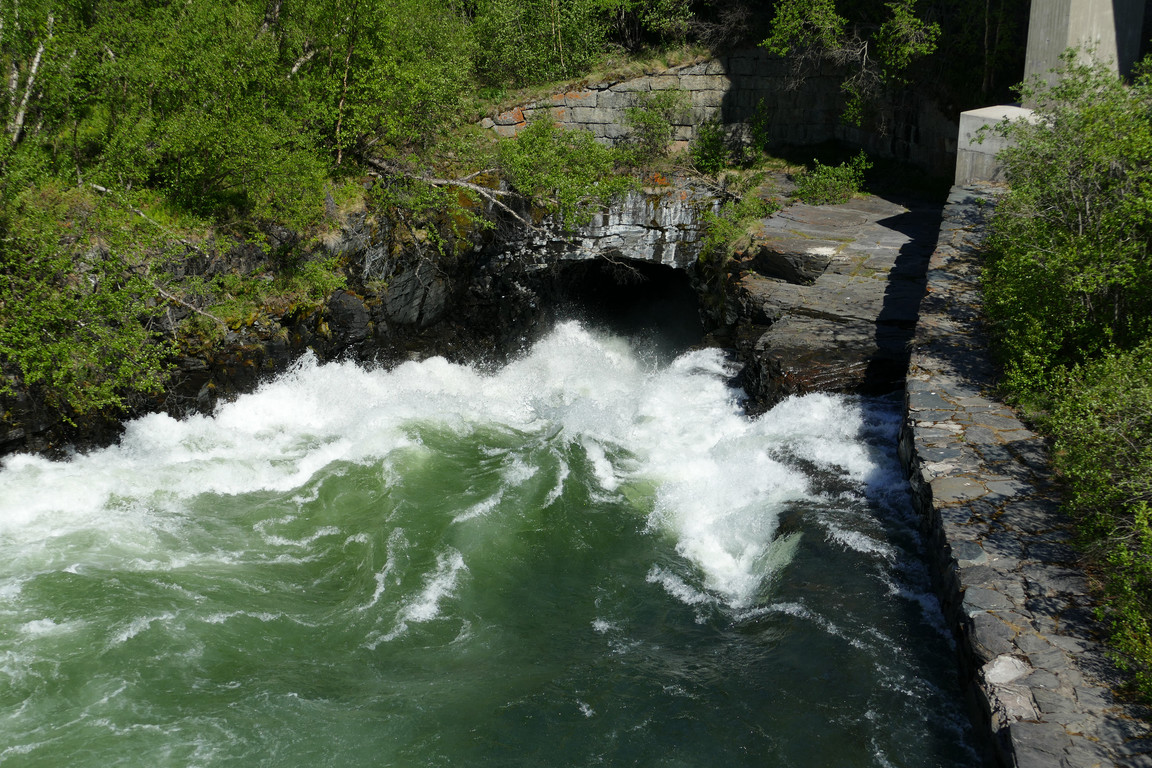
Ábeskoeatnu down
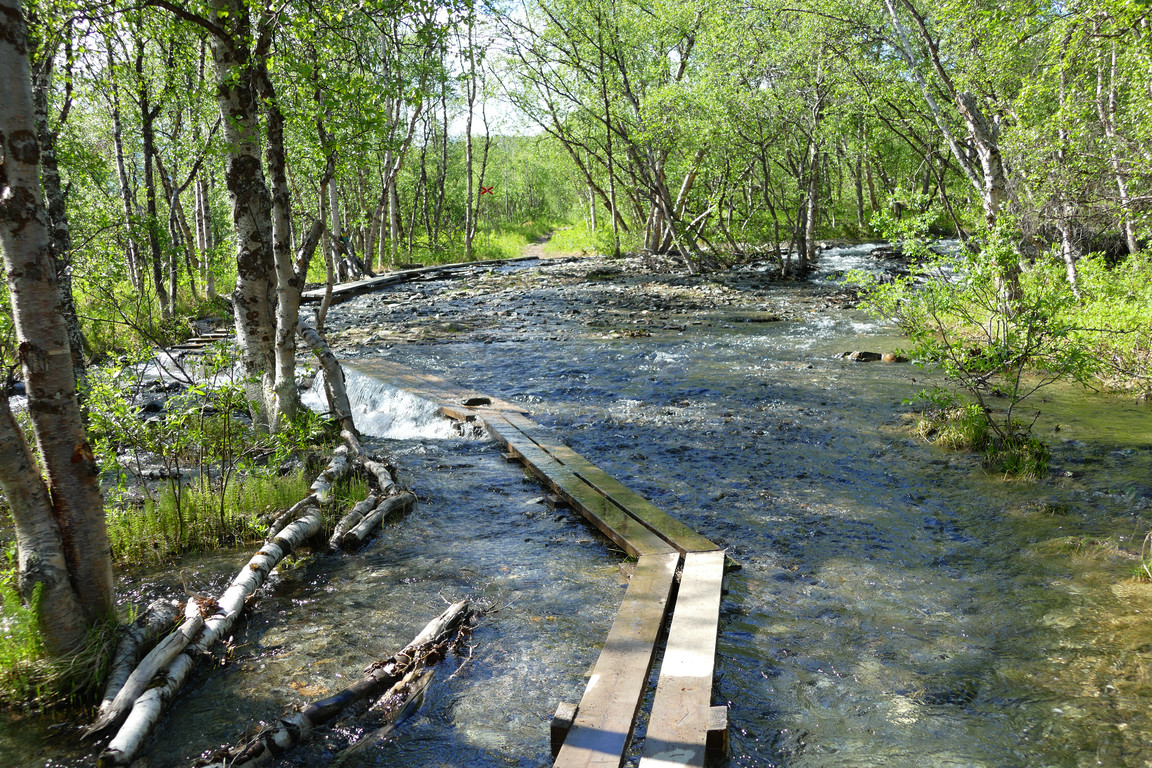
Rihtonjira
I walked briskly, even considering the incline, and a nice wind kept the temperature at tolerable levels despite the effort. The sun was shining for the most part, but Abiskoalperna were still not entirely free of cloud. Further up there were some wet sections, and I passed the first little snowfield. As the forest grew sparser wider views made themselves known, and I soon started looking for a good place to stop for lunch. I passed a well-utilized spot beside a small brook, but since this was in a hollow I instead picked my way up onto the nearby rise, sitting down on a sparsely wooded hilltop at 12:30.
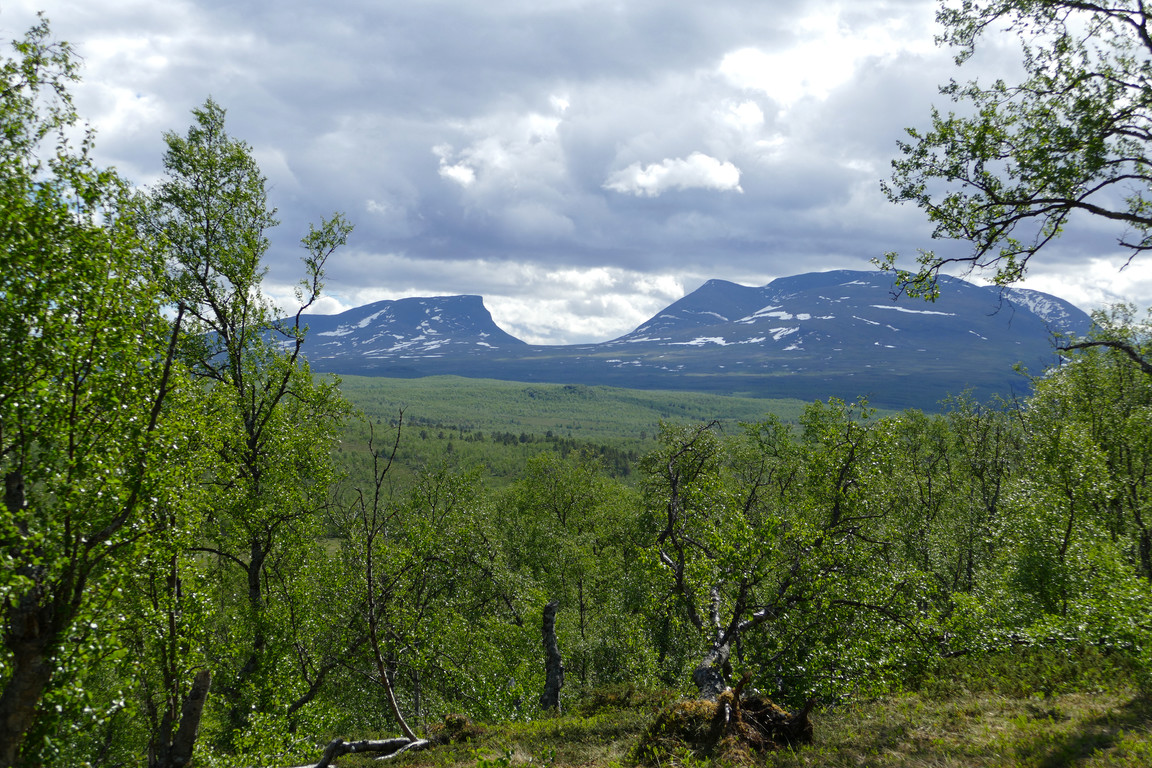
Lapporten (Lap Gate)
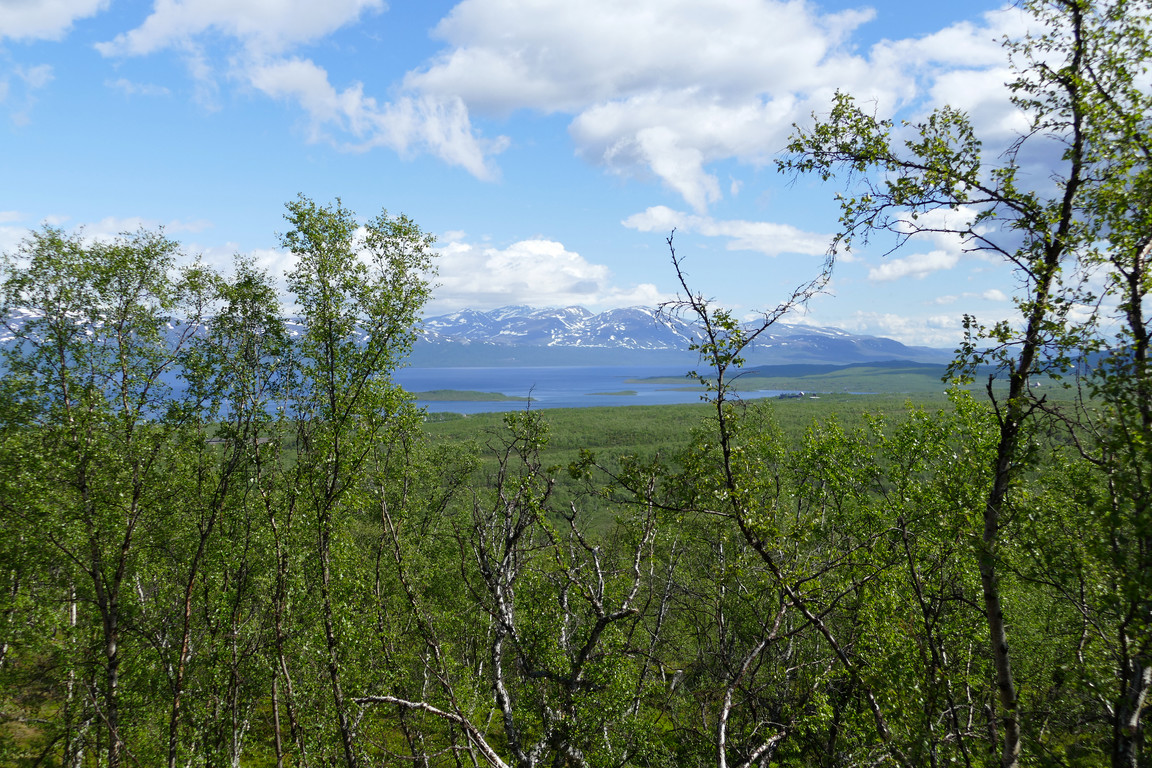
Torneträsk below
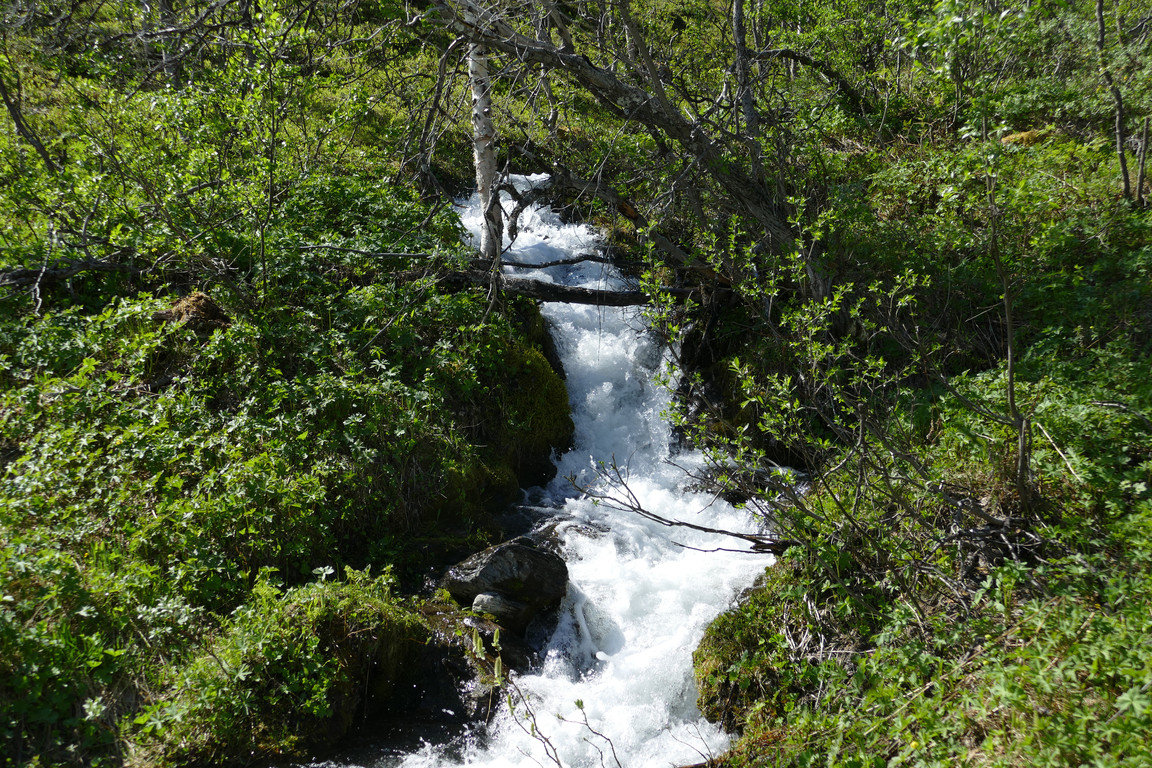
Swift waters
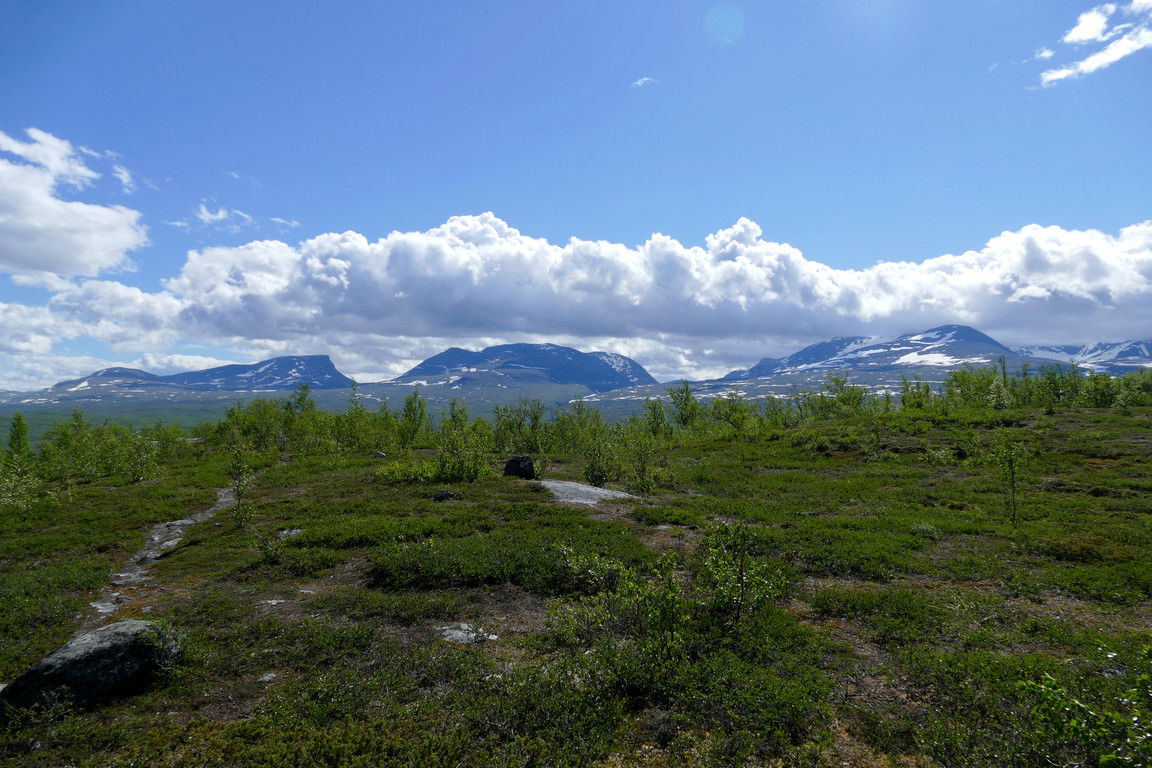
Full view of Abiskoalperna
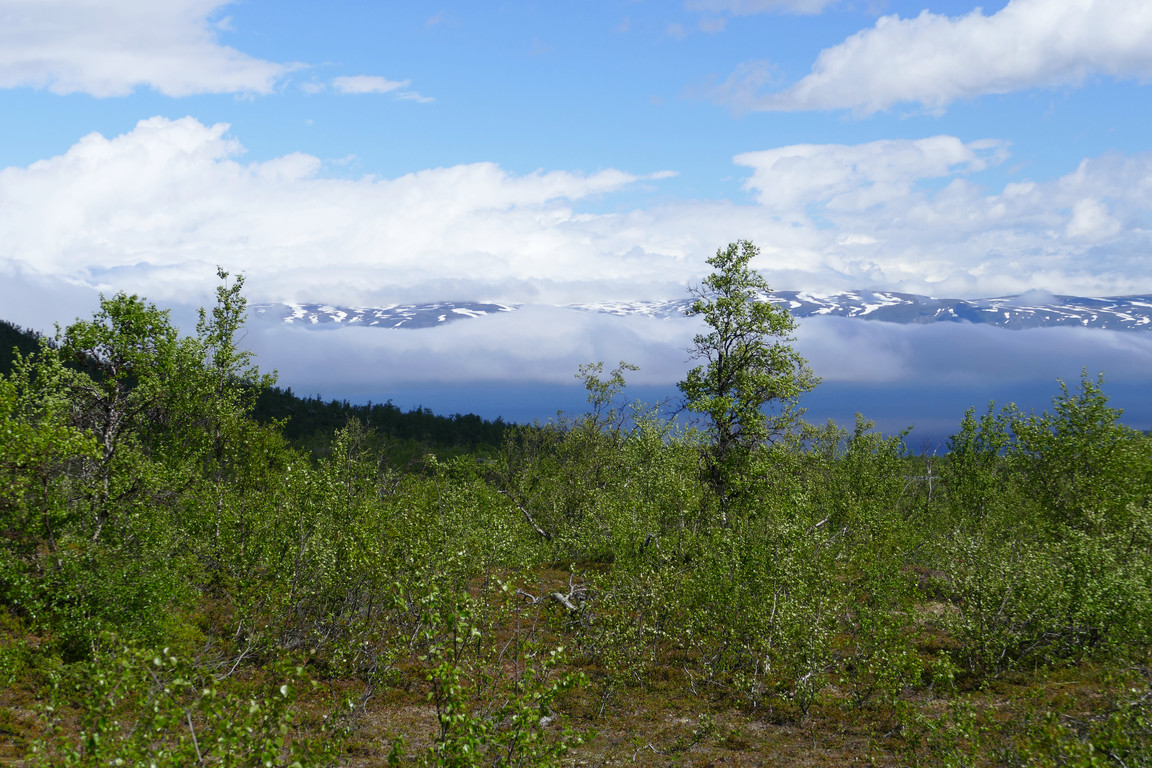
As I sat there eating, clouds drifted up from Torneträsk towards Lapporten, but other than that the weather was still good. After retying my boots and looking at the views some more I returned down to the trail, where water had now started to flow on the path at places, and clouds were passing in front of the sun every now and then. Soon I emerged onto open land strewn with hills, against one of which I found a quartet of young people resting; they were headed up the valley, so I was likely to see them again on the morrow. Shortly thereafter I exited Abisko National Park and came to the spot where there used to be a bridge over Gorsajohka, which I had employed before, but it had recently been permanently removed, and judging from the swiftness of the stream no crossing was possible now.
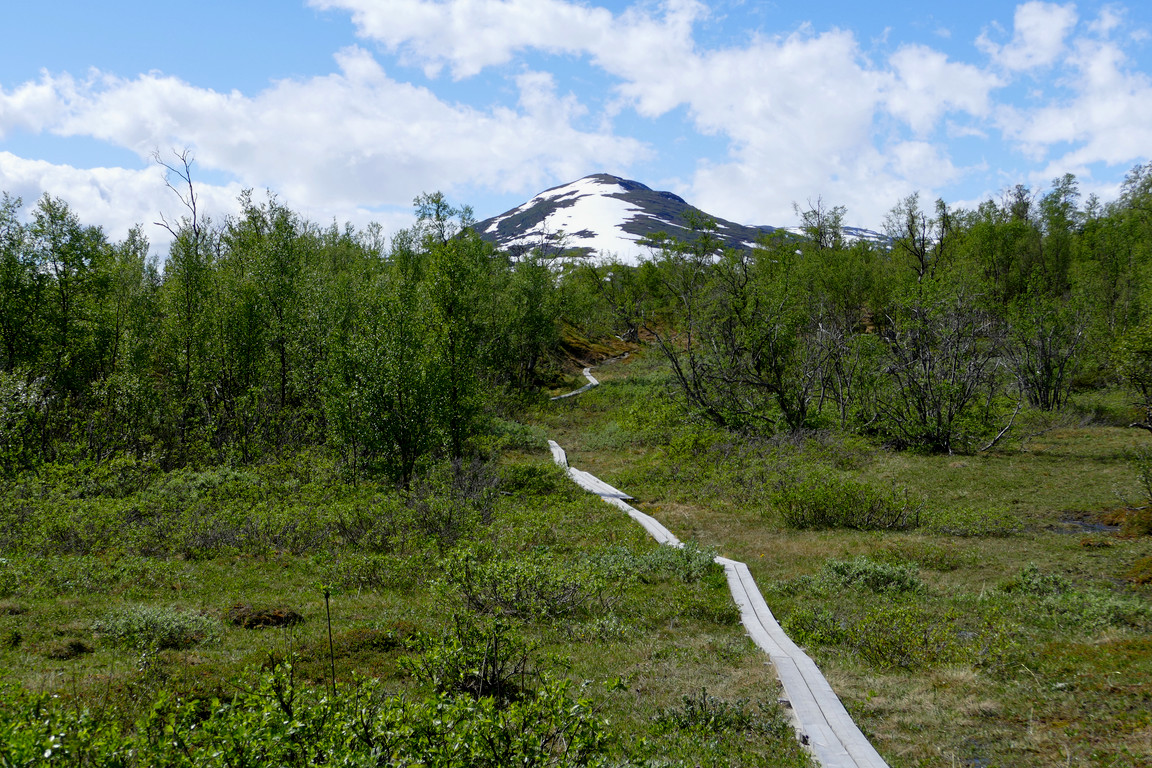
Njunesgeahči ahead
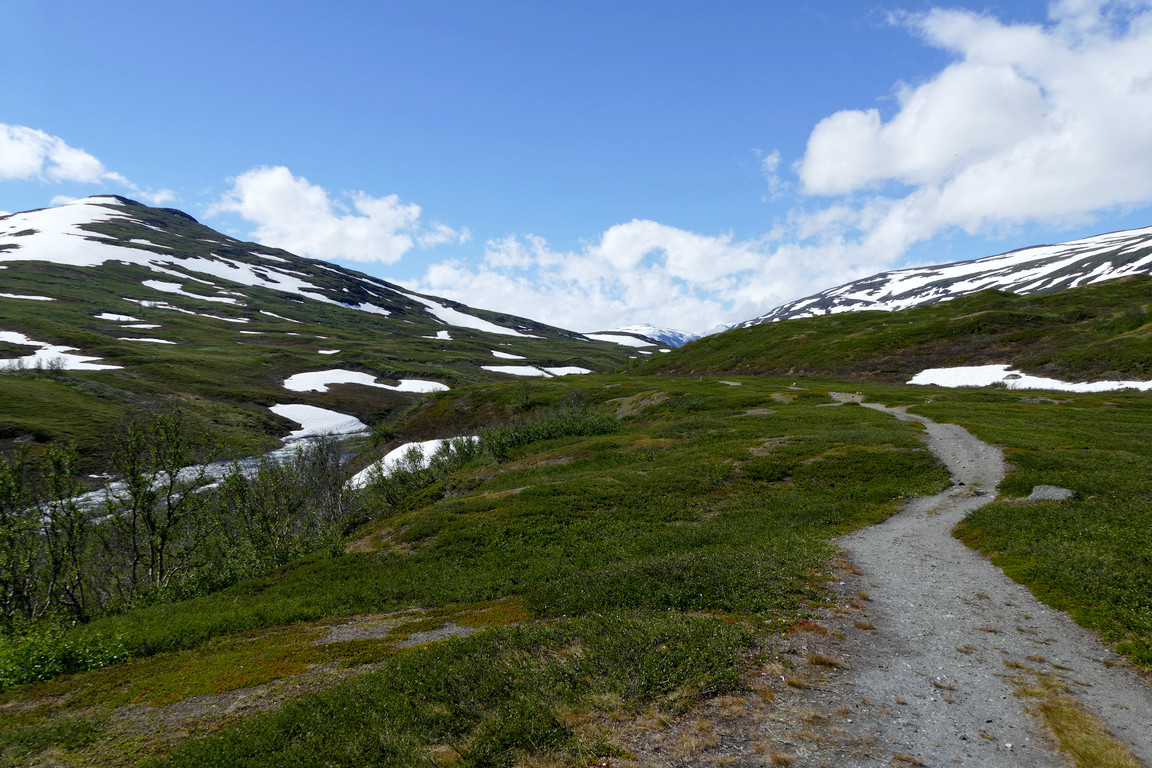
Approaching Gorsavággi
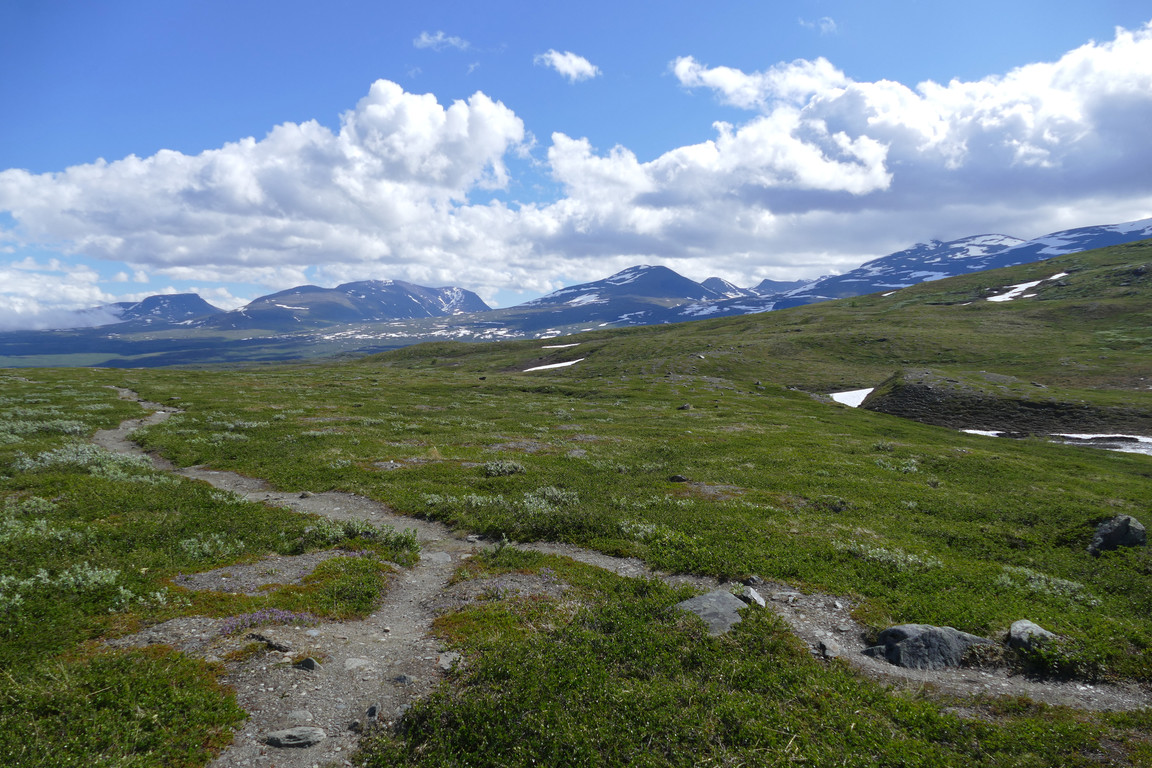
Abiskoalperna behind
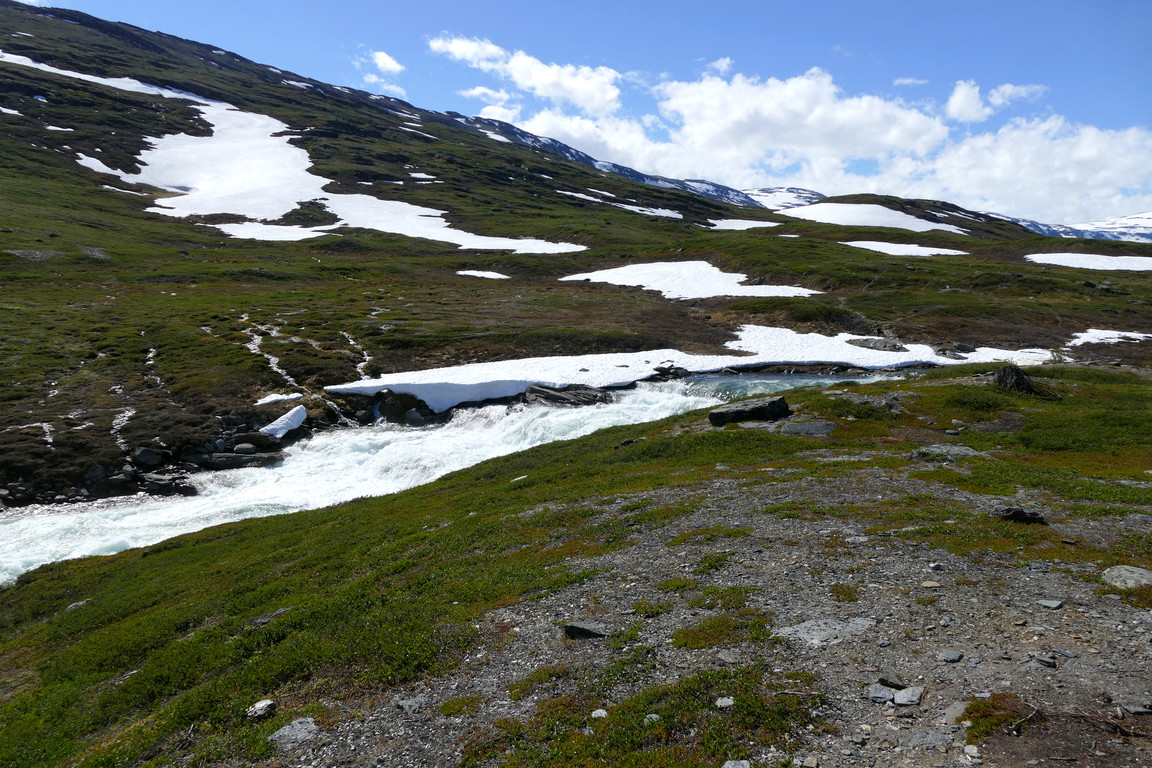
Impassable Gorsajohka
After that the sun was out again most of the time, and now larger snowfields started appearing at (ir)regular intervals. For the most part the snow carried well, except right around the edges, and in many cases they facilitated the crossing of various streams coming down from the heights, which were rather full due to all the still-melting snow. In a few cases I carefully checked the stability of the arches with the walking stick before attempting to cross, but even had I not elected to use such snow bridges circumventing them would have been fairly easy.
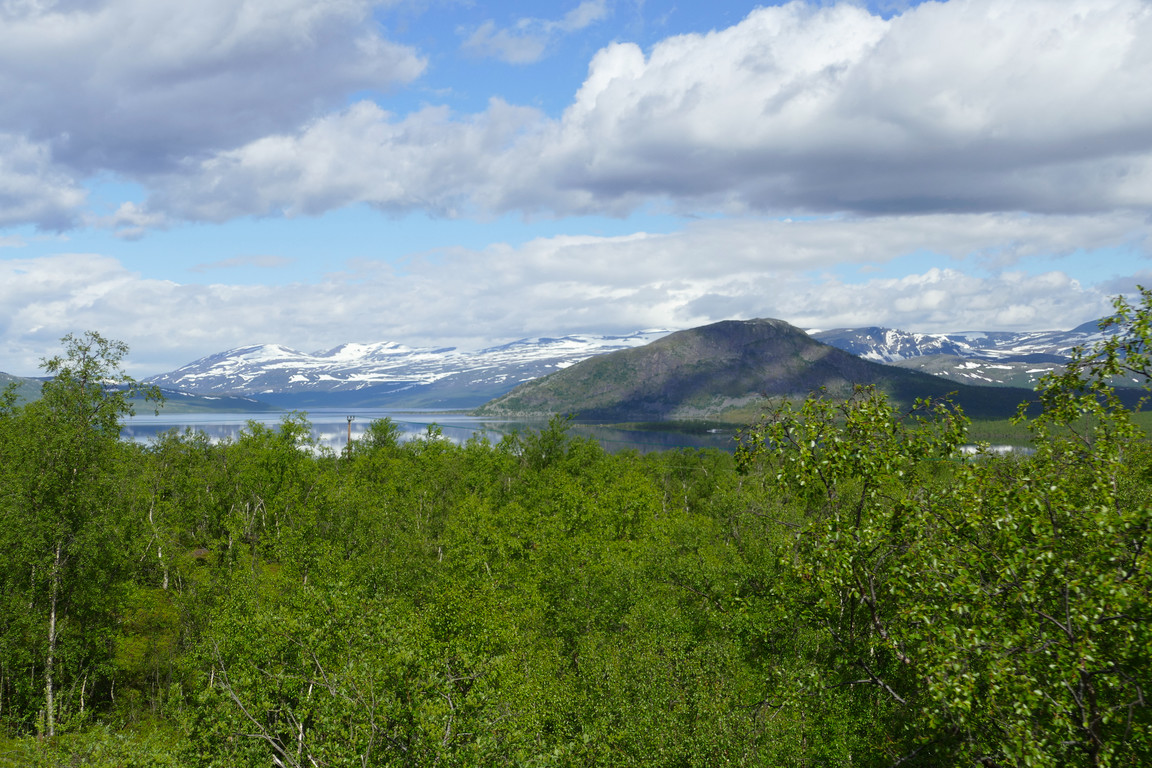
In an area of trees there was a noticeably softer snowfield, where I sank down every other (or third) step, but luckily it did not last for long. Said trees were green, as was most of the valley; only in a few places where the snow had just melted the vegetation was still grey/brown – but the first lake, Vuolimus Gorsajávri, was still partially covered in ice. The following intersecting streams were swifter, without snow bridges, and I had to look around a bit to find suitable places to cross.
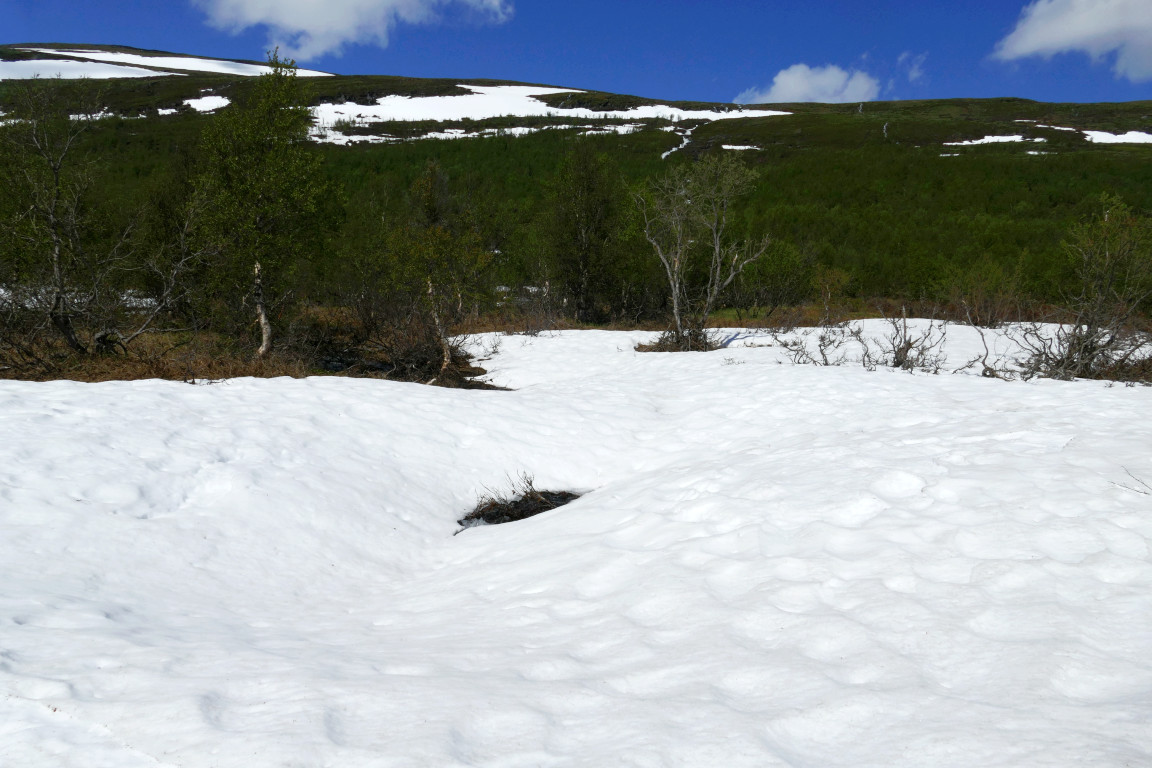
Snow over water
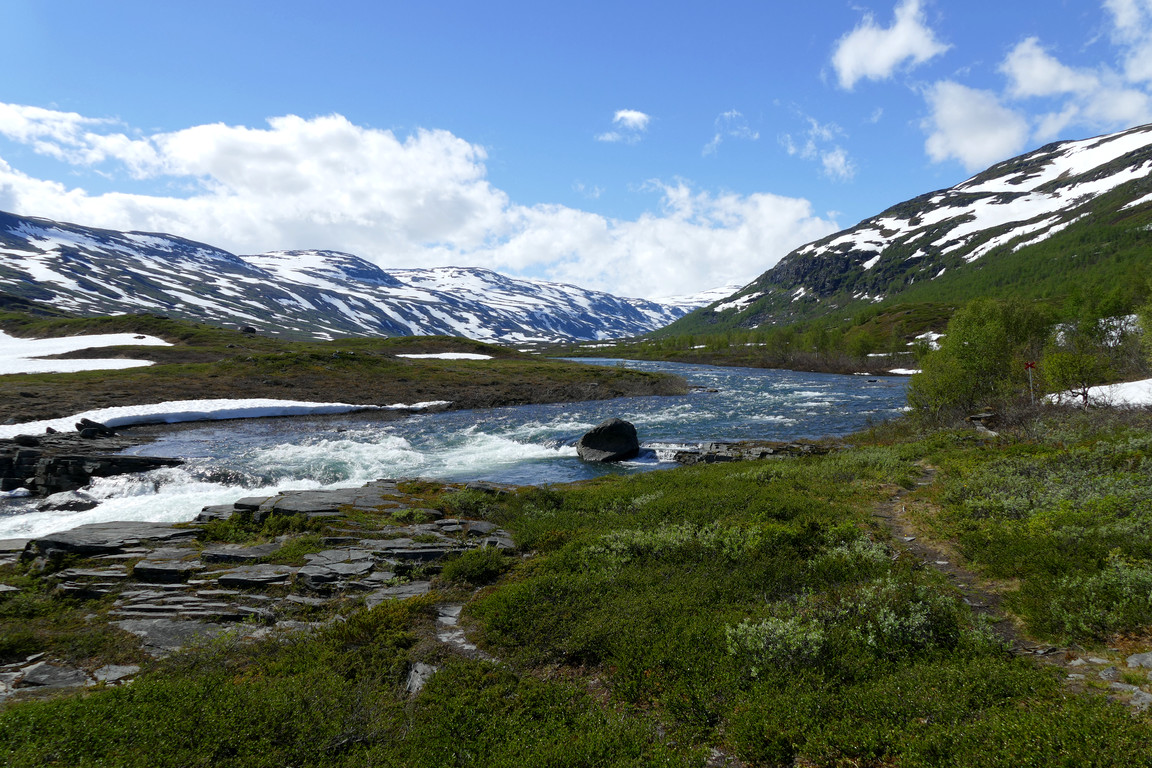
Gorsajohka widening
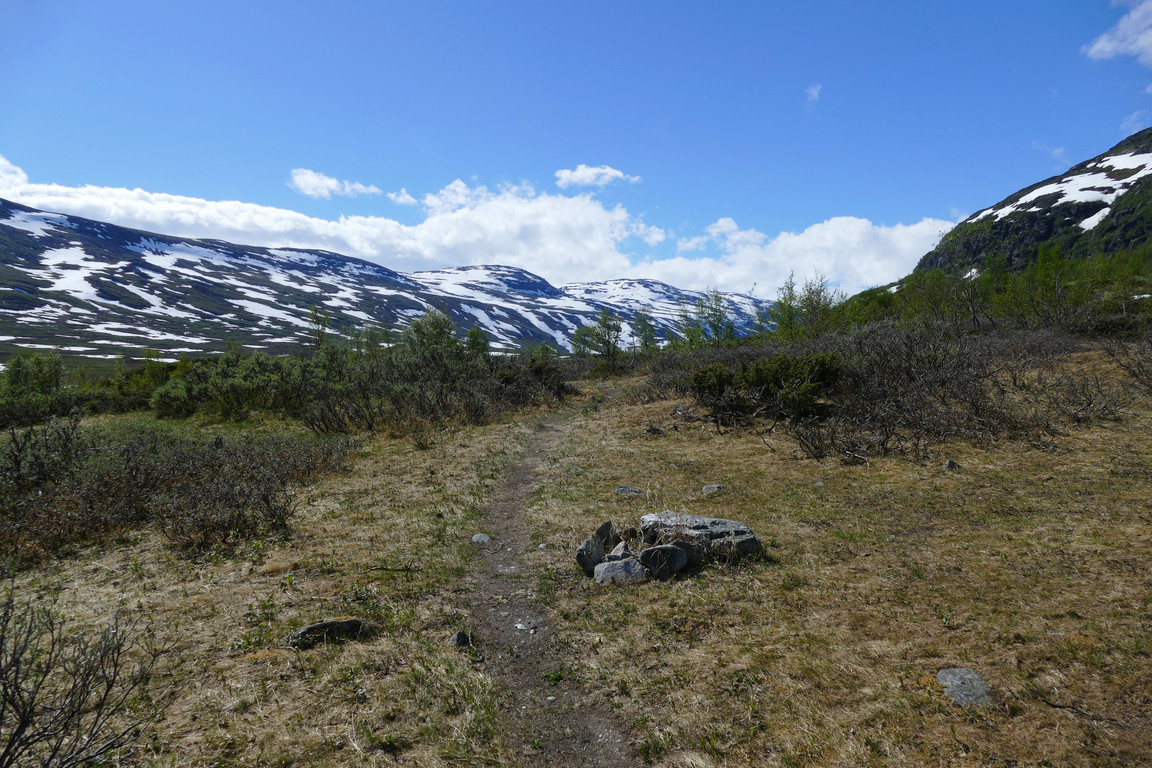
Dry
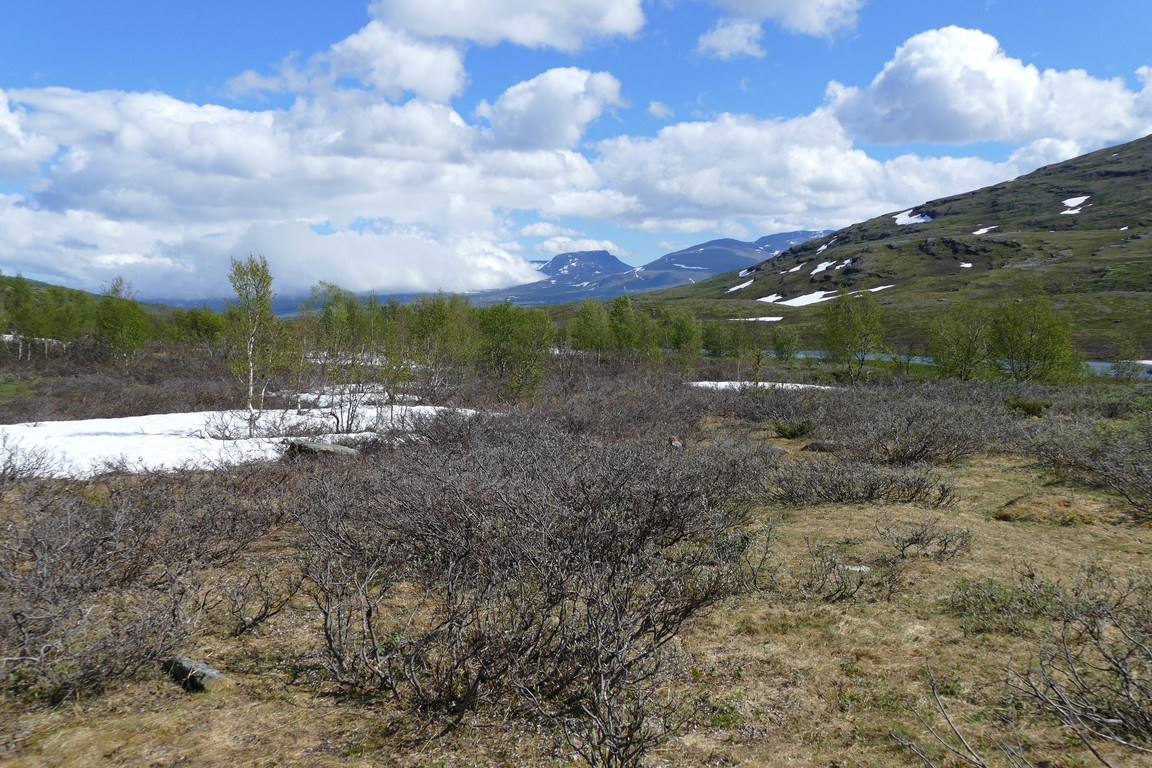
Recently melted
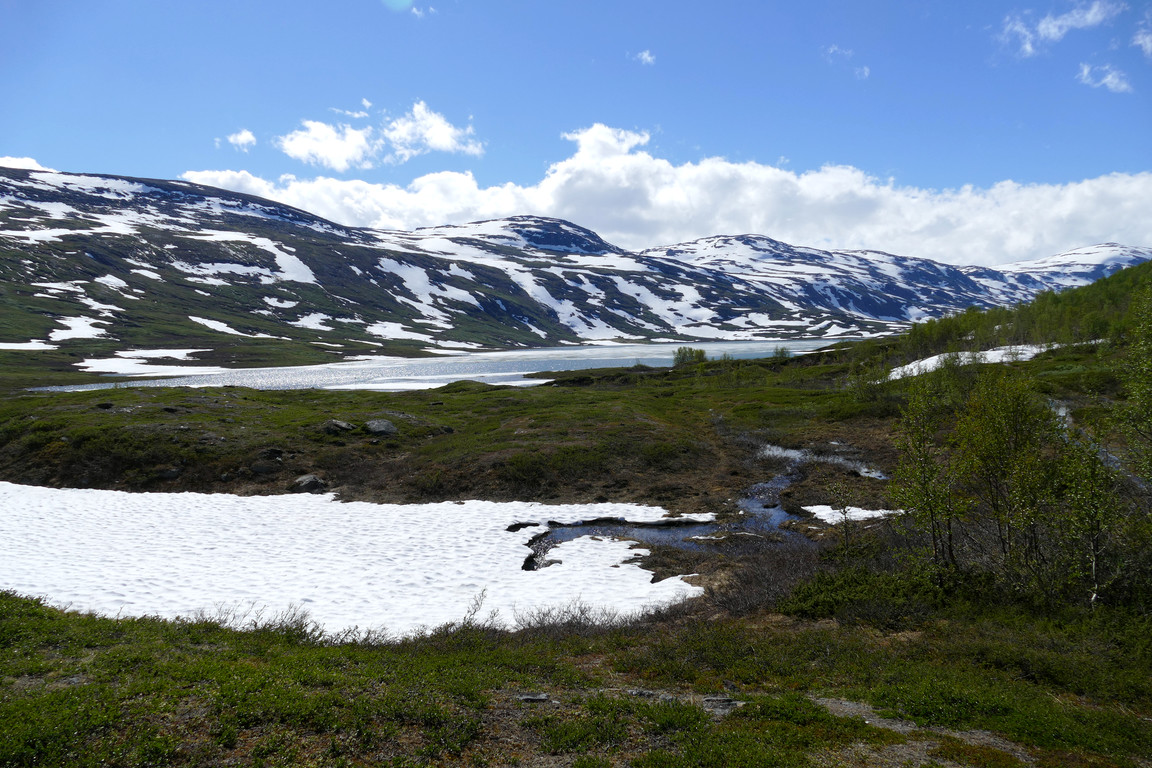
Vuolimus Gorsajávri in sight
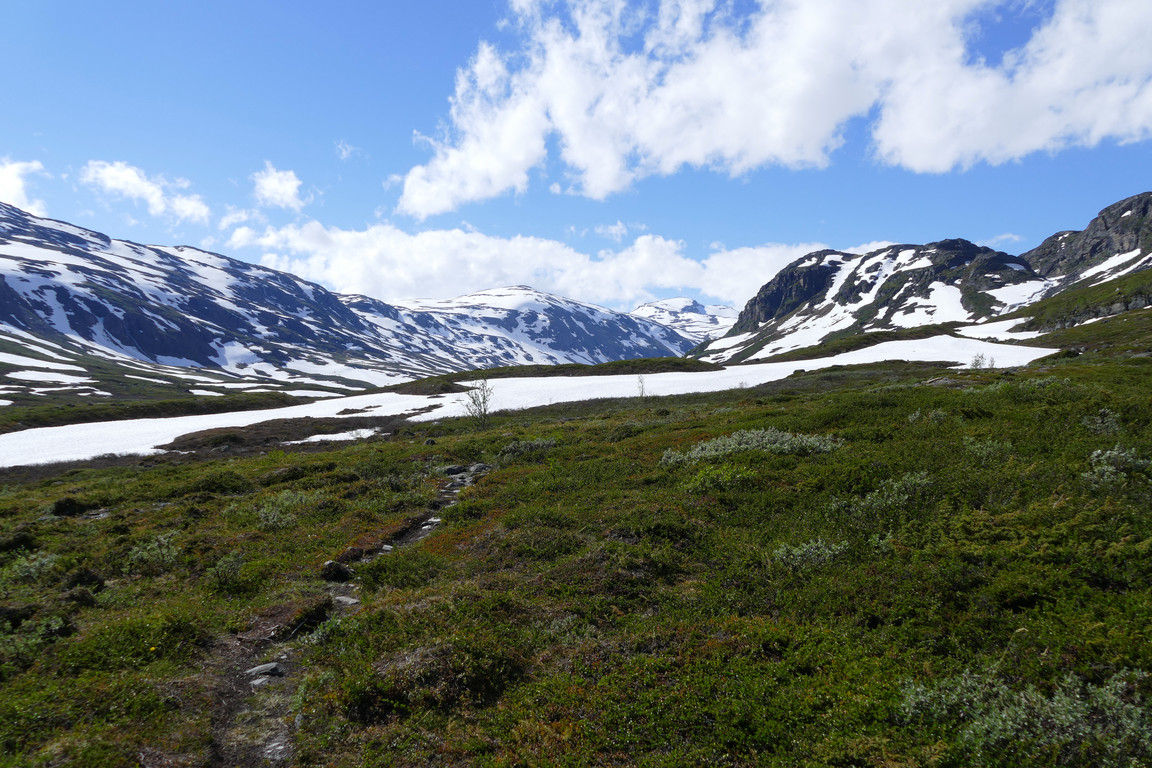
Further into the valley
Shortly after having caught sight of the cottage, noting the apparent presence of people there, I came to another swift and deep stream, which was just barely narrow enough for me to just barely leap across. As expected the stream from Latnjajávri was swifter still, and it only took one look to determine that this would require an actual ford.
I therefore changed into the slippers and set out into the current, which reached to my knees at the deepest spots – and it was freezing cold, quite literally since it consisted of meltwater. The stream had several arms, one of which was wide and torrentuous enough that I took a roundabout course through the water in search of more shallow steps, so my feet were rather icy once I was across. I kept the slippers on until I was over all arms and out of the osier, which was dense enough to scratch my exposed legs, and then changed back to the boots. The remaining bit was easy enough, with several larger snowfields to cross, so I walked briskly and arrived at the newly constructed warden's cottage after 15:45.
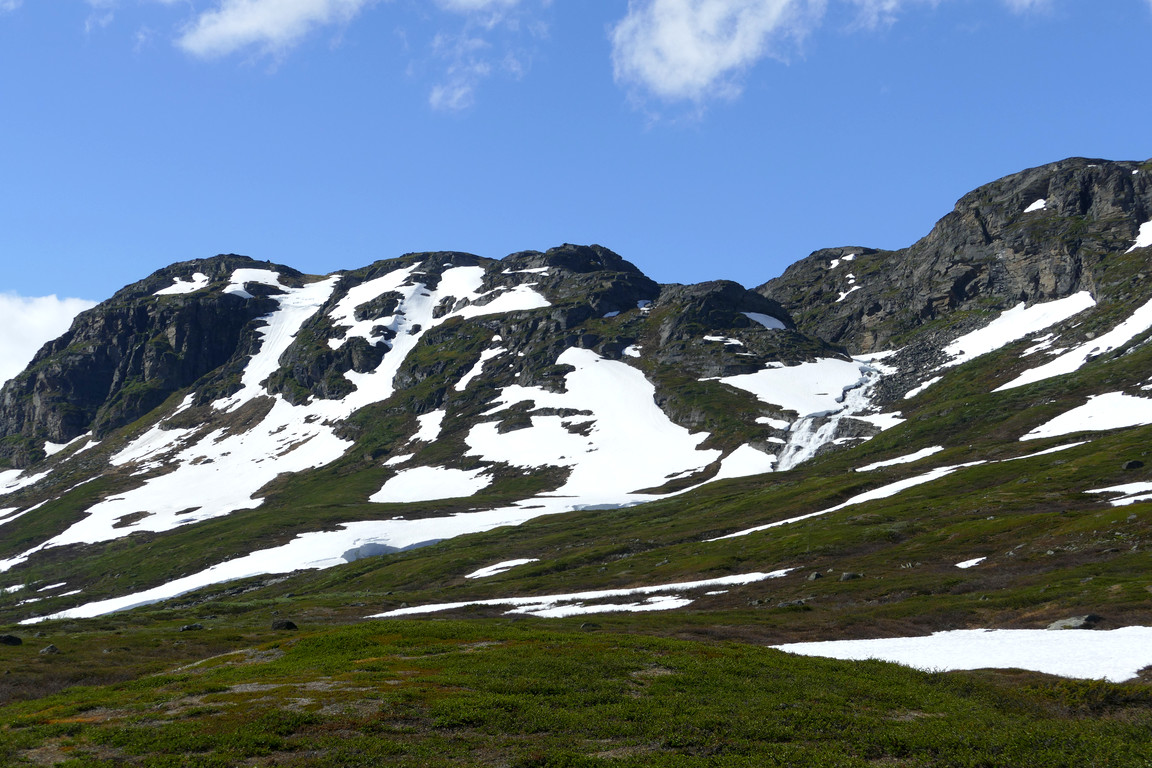
The ravine leading to Latnjavággi
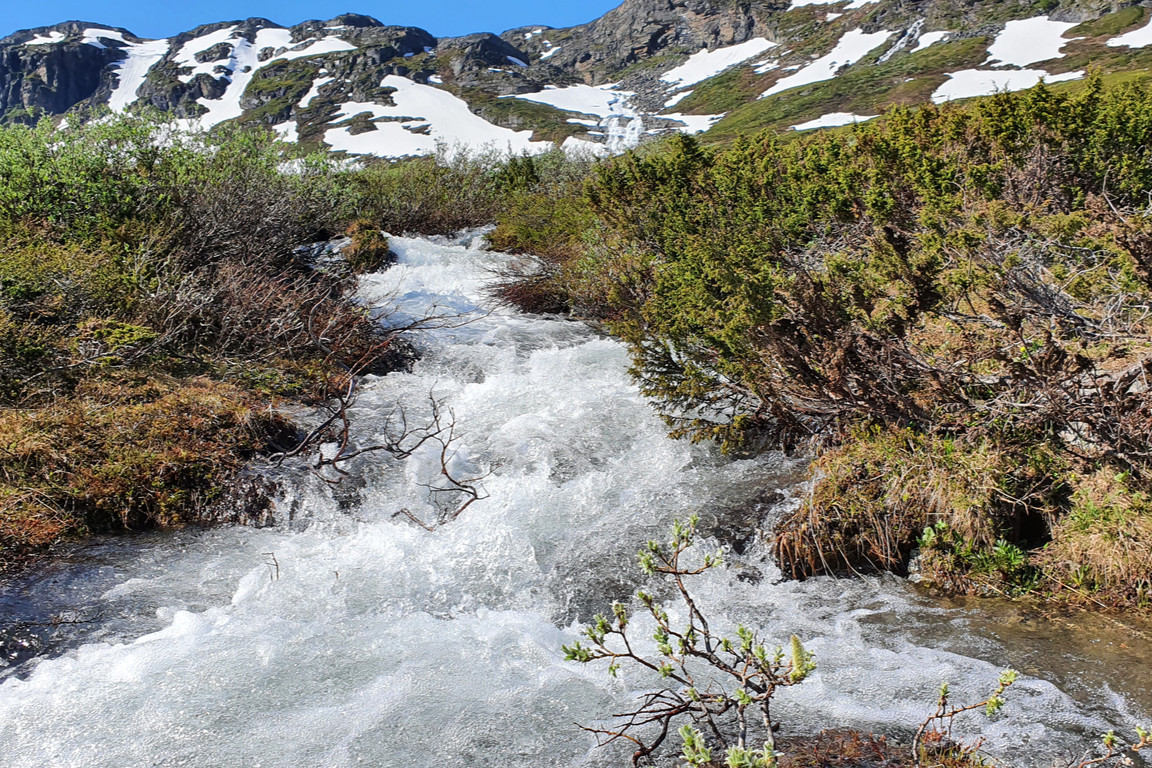
The first swift stream
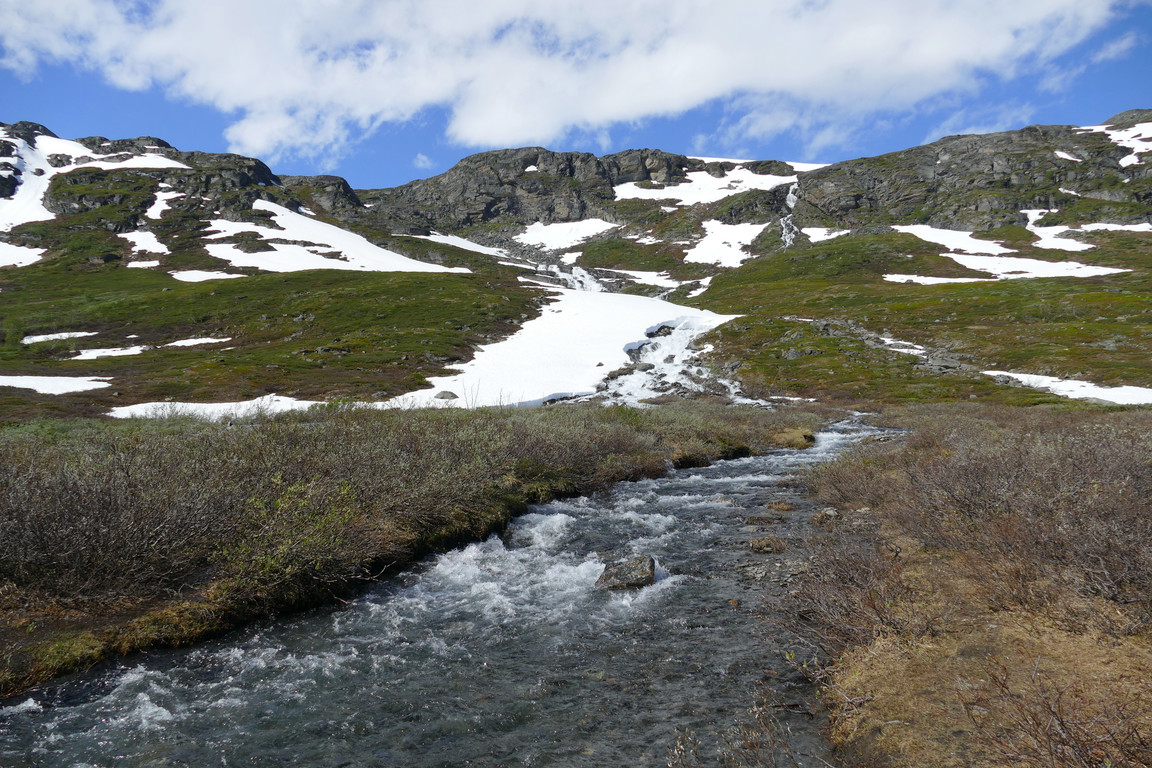
The Latnjavággi stream
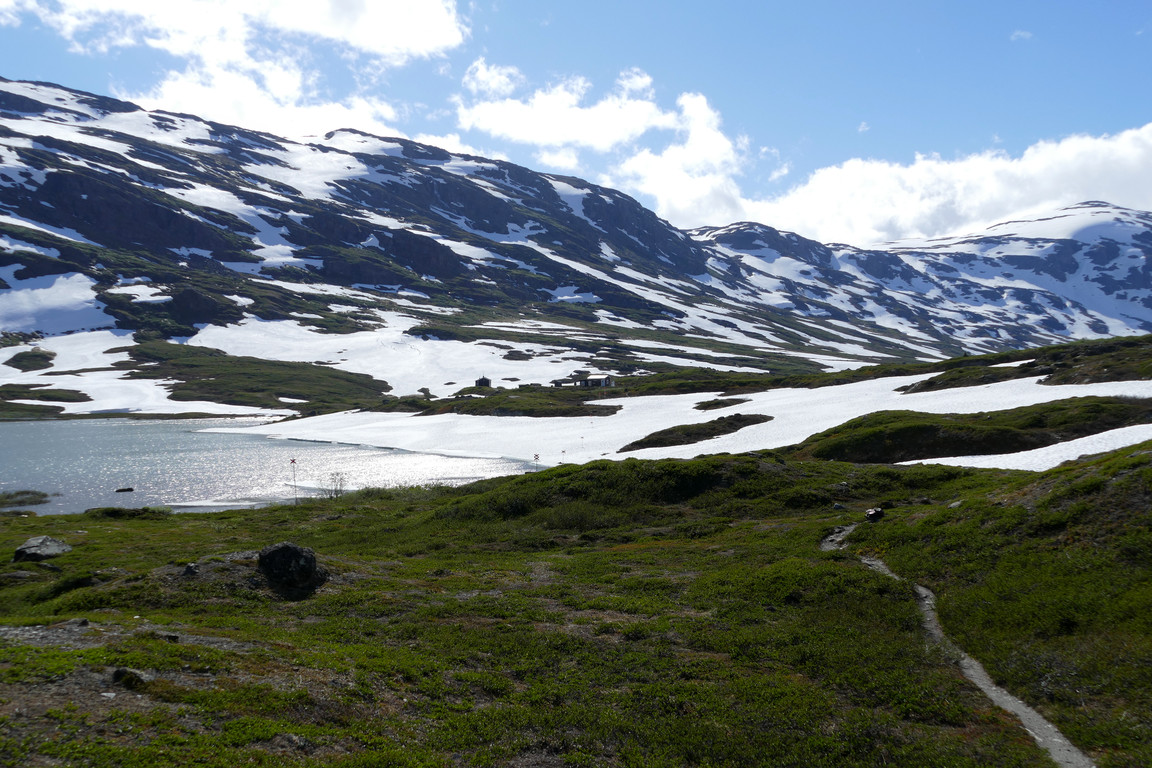
Almost there!